Gravel Size Chart: #57, #67, #8, 3/4 Inch and More Explained
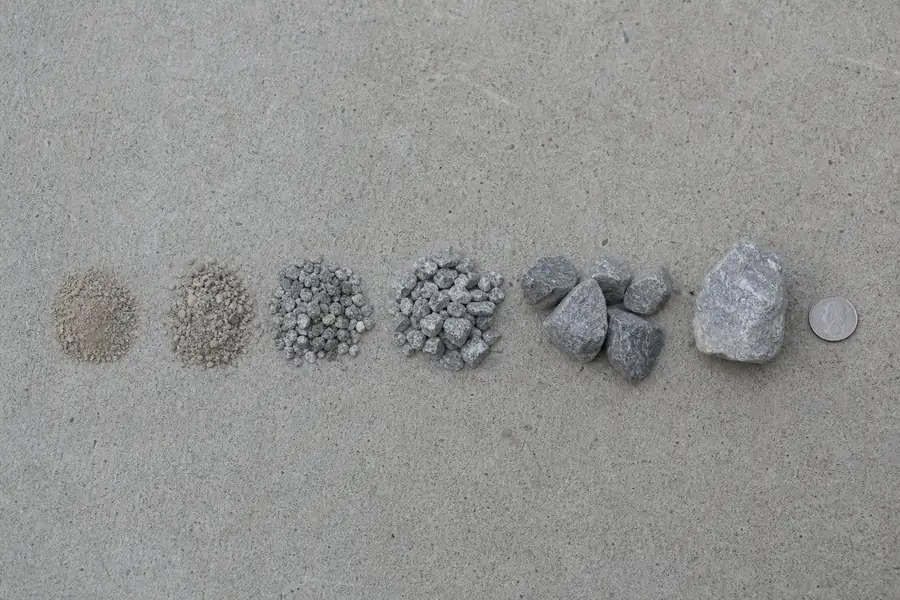
Order gravel in Texas and you run into a jumble of numbers and fractions: #57, #67, #8, #89, 3/4 inch, 3/8 inch. Each one describes a different range of stone sizes, and picking the wrong one means a driveway base that won't compact or a drain line that clogs with fines.
This gravel size chart lines up every common grade by size, Texas name and best use, so you order the right stone the first time.
- Stone numbers run coarse to fine: higher numbers mean smaller stone, lower numbers mean bigger rock.
- "Minus" after a size, like 3/4 inch minus, means the mix includes everything from that size down to dust, which is what makes it compact.
- #57 Stone and #67 Stone are the two most common all-purpose Texas gravels for driveways and drainage.
- #8 Crushed Stone and #89 Crushed Stone are fine chip sizes used for bedding, paver joints and exposed aggregate finishes.
- Flex Base, the Texas name for crushed limestone road base, isn't a numbered stone at all. It's a blended mix built for compaction, not a single particle size.
Gravel Size Chart: Stone Numbers From #4 to #89
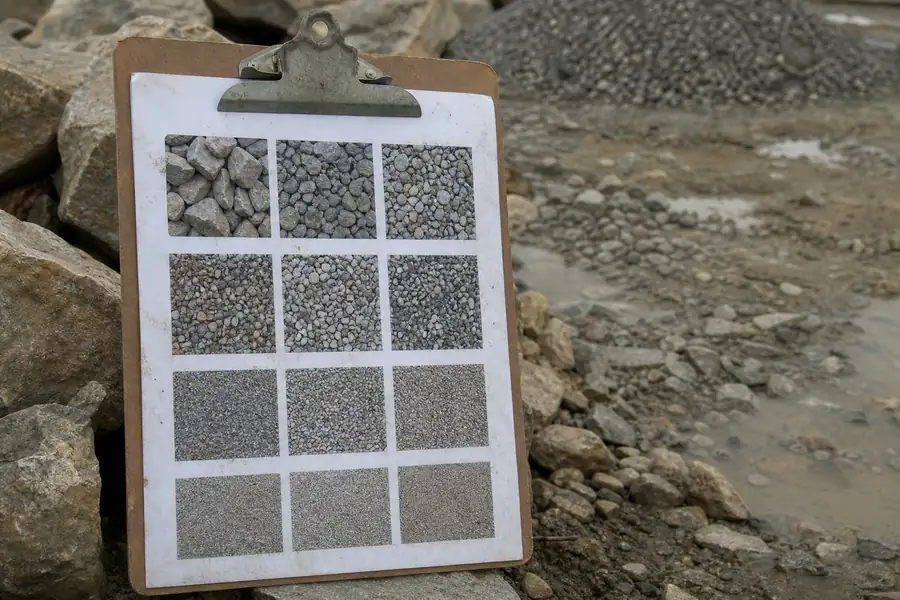
A gravel size chart organizes crushed stone by the sieve size it passes through, not by color or look. At the coarse end, #4 crushed stone runs 1.5 to 2.5 inches and handles riprap and heavy drainage work. #57 Stone and #67 Stone sit in the middle, both built around 3/4 inch minus material that compacts well for driveways and pipe bedding. On the fine end, #8 Crushed Stone runs 3/8 to 1/2 inch and #89 Crushed Stone drops down to about 1/8 inch, both suited to paver joints, bedding and tight drainage lines.
| Stone Number | Size Range | Typical Texas Use |
|---|---|---|
| #4 | 1.5 to 2.5 in | Riprap, erosion control, large drain fields |
| #57 | 3/4 in minus | Driveways, French drains, concrete mix |
| #67 | 3/4 in minus, finer gradation | Base material, pipe bedding, general drainage |
| #8 | 3/8 to 1/2 in | Exposed aggregate, drainage, pipe bedding |
| #89 | 1/8 to 3/8 in | Paver joints, bedding sand replacement, fine drainage |
What Does Gravel Size "Minus" Mean?
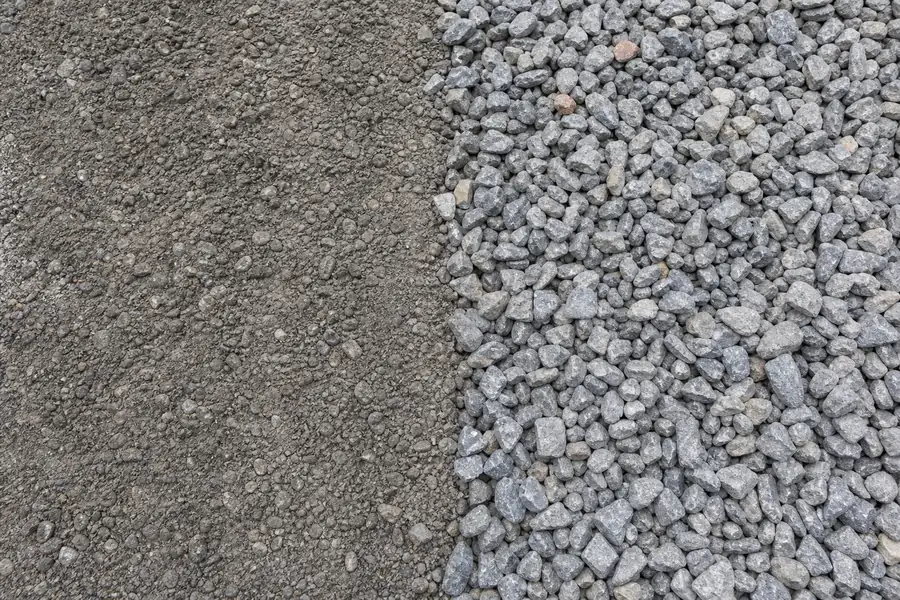
"Minus" after a gravel size means the load includes every particle from that size down to fine dust, not just one uniform piece size. A "3/4 inch minus" load has rocks up to 3/4 inch mixed with smaller fragments and fines that pack tight under a compactor.
That's different from a "clean" or washed stone of the same top size, which has the fines screened out so water drains through it instead of sitting on top. Minus materials, like the mix behind #57 Stone, are what you want under a driveway or shed pad. Clean, washed stone is what you want in a French drain or around a drain pipe, where open space between the rocks is the whole point.
Fractional Gravel Sizes vs Numbered Sizes
Fractional sizes like 3/4 inch and 3/8 inch describe the largest stone in the load, while numbered sizes like #57 or #8 describe a graded range built to a quarry spec. Landscape suppliers often sell by fraction because it's an easier conversation for a homeowner: driveway gravel and walkway gravel are usually labeled this way.
Contractors working from a spec sheet order by number instead, since #57 and #67 correspond to specific gradation bands that TxDOT and ready-mix plants reference directly. In practice the two systems overlap: 3/4 inch crushed stone grades out close to a #57, and 3/8 inch material lines up with an #8. If a supplier quotes you one system and your plans call for the other, match them by size range rather than by name.
How Deep to Lay Each Gravel Size
Depth depends on the job, not the stone size alone. A compacted driveway base wants 4 to 6 inches, while a decorative top dressing needs only 1 to 2 inches of the same material. Across the I-35 corridor, expansive clay moves several inches a year with moisture, so base depth and drainage away from the slab matter more here than frost ever will; see our breakdown of black gumbo clay drainage for how that plays out on a typical lot.
| Use | Recommended Depth | Best Stone Size |
|---|---|---|
| Driveway base | 4 to 6 in compacted | Flex Base, #57 Stone |
| French drain trench | 12 to 18 in of fill | #57 Stone, #67 Stone, drain rock |
| Paver or patio bedding | 1 to 2 in setting bed | #89 Crushed Stone, stone screenings |
| Walkway topping | 2 in | 3/4 inch crushed stone, pea gravel |
| Exposed aggregate finish | 1 to 2 in | #8 Crushed Stone, Texas river rock |
Texas Names for Gravel Sizes: Flex Base and Beyond
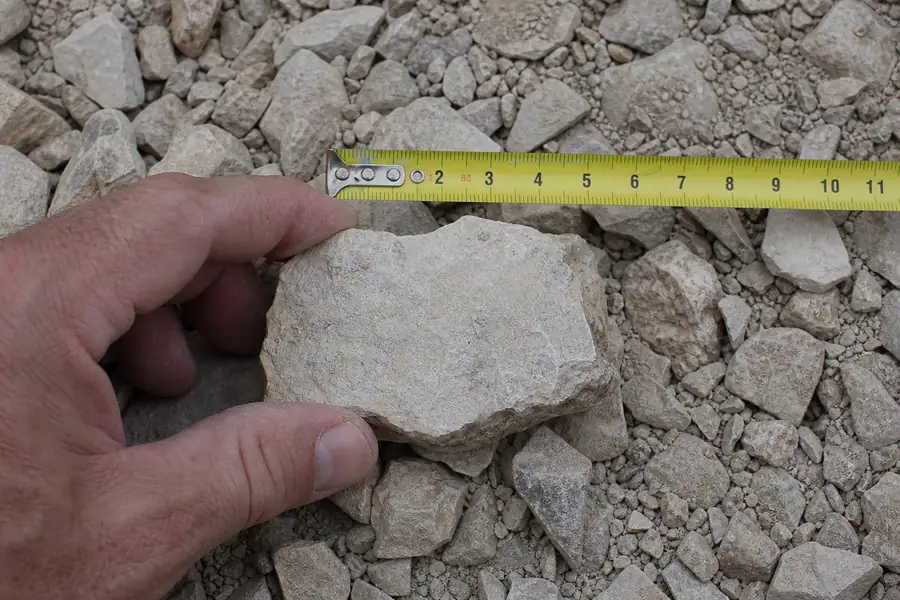
Flex Base is the Texas name for crushed limestone road base, a blended mix of stone and fines compacted into driveways and ranch roads rather than sold as a single numbered stone size. Our guide to flex base in Texas covers how it's built and compacted in more detail.
Crushed Limestone Base is another local name you'll hear for a similar cement-stabilized product, and #57 Limestone is simply how many Texas yards refer to #57 Stone once it comes from a local limestone quarry instead of a river gravel source. None of these are separate products from the numbered chart above; they're just the names the trade uses day to day.
FAQs
What does "3/4 inch minus" mean on a gravel order?
It means the load contains stone up to 3/4 inch along with smaller fragments and fines, all graded together. That mix of sizes is what lets the material compact into a solid, stable base instead of staying loose like a single-size clean stone.
What's the difference between #57 and #67 gravel?
Both are 3/4 inch minus limestone, but #67 runs a slightly finer gradation with more small material mixed in. #57 is the more common all-purpose choice for driveways and drainage, while #67 is often specified for base layers and pipe bedding where a tighter pack is wanted.
What gravel size is flex base?
Flex base isn't a single numbered size. It's a graded mix of crushed limestone that ranges from roughly 1.5 inch rock down to fine dust, engineered to compact into a dense, stable layer under driveways and ranch roads.
What size gravel is best for drainage?
Washed #57 Stone or #67 Stone are the standard choices for French drains and drain fields because their larger particle size leaves open space for water to move through. Avoid minus mixes with heavy fines in a drain trench, since the fines fill the gaps and slow drainage down.
Is #8 or #89 gravel better for paver joints?
#89 Crushed Stone is the better fit for paver joints and bedding because its smaller size, down to about 1/8 inch, sweeps into tight gaps more easily. #8 Crushed Stone runs a bit larger and works better as a drainage layer or exposed aggregate topping.