How Much Does a Yard of Gravel Weigh? Tons vs Cubic Yards Explained
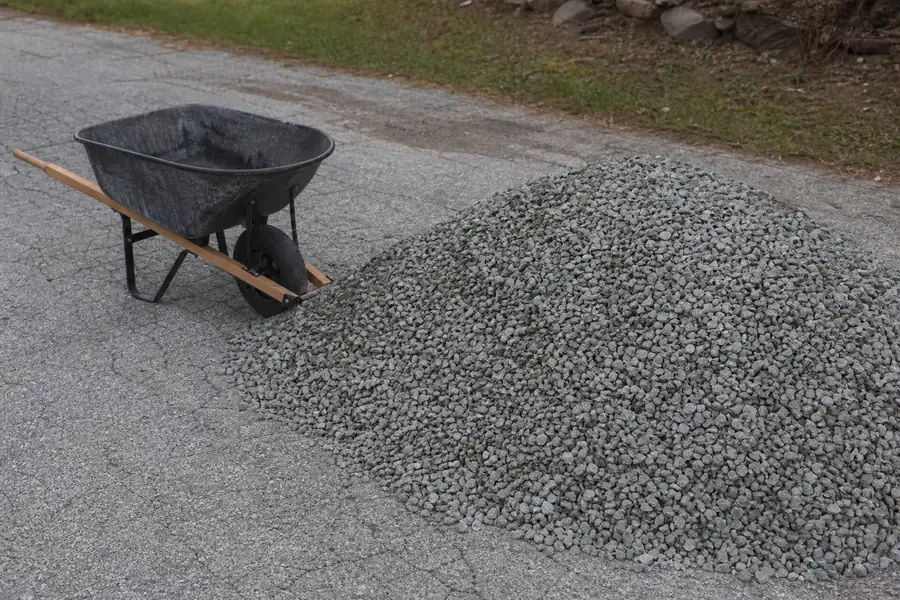
Quick answer: A cubic yard of gravel weighs about 2,700 to 2,900 pounds, or roughly 1.4 tons, for standard crushed limestone gravel. Lighter materials like pea gravel run closer to 1.3 tons per cubic yard, while compacted base material can push past 1.5 tons.
That range matters because gravel is sold by the ton but measured for coverage in cubic yards. Get the conversion wrong and you either order a truckload too little and stall the job, or pay freight on material you didn't need.
The weight swings with the stone itself: how dense the parent rock is, how much air sits between the pieces, and how wet the pile is when it's loaded. A yard of wet gravel can weigh several hundred pounds more than the same yard dry, because water fills the gaps between the stones.
How Much Does a Yard of Gravel Weigh by Material?
Weight per cubic yard depends on the material, and the differences are big enough to change your order. Driveway gravel, the crushed limestone most Texas driveways and ranch roads are built on, typically weighs 2,700 to 2,900 pounds per cubic yard. Smoother, rounder stone like pea gravel packs a little lighter because the rounded pieces leave more air space between them.
| Material | Pounds per cubic yard | Tons per cubic yard |
|---|---|---|
| Driveway Gravel (crushed limestone) | 2,700 - 2,900 lbs | 1.35 - 1.45 tons |
| 57 Stone | 2,700 - 2,800 lbs | 1.35 - 1.4 tons |
| Pea Gravel | 2,500 - 2,700 lbs | 1.25 - 1.35 tons |
| Texas River Rock | 2,600 - 2,800 lbs | 1.3 - 1.4 tons |
| Crushed Limestone Base (compacted) | 3,000 - 3,200 lbs | 1.5 - 1.6 tons |
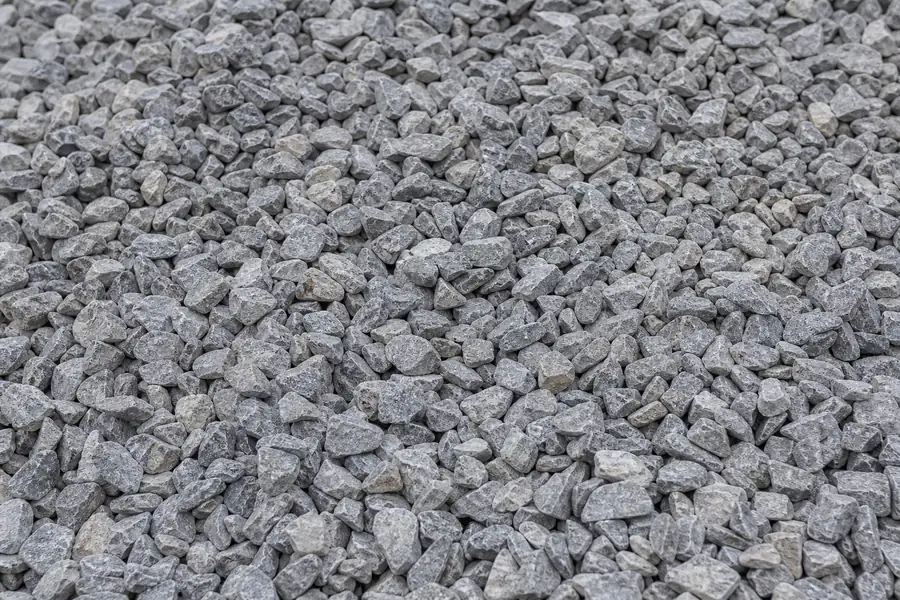
Sizing drives weight too. Smaller, more angular stone like 57 stone locks together tighter than large river rock, so a cubic yard of it carries more rock and less empty space. If you're not sure which size number fits your project, the gravel size chart breaks down what each stone number actually looks like on the ground.
How Far Does a Ton of Gravel Cover?
One ton of gravel covers about 100 square feet at 2 inches deep, the standard depth for a top dressing layer. Go deeper and the coverage drops fast, since you're spreading the same ton of rock over a thicker, narrower footprint.
| Depth | Coverage per ton |
|---|---|
| 2 inches | Approx. 100 sq ft |
| 3 inches | Approx. 70 sq ft |
| 4 inches | Approx. 50 sq ft |
| 6 inches | Approx. 33 sq ft |
A driveway or parking pad usually calls for 4 to 6 inches of compacted base before any topping layer, since Texas clay soils shift enough with moisture that a thin base won't hold its shape. A walkway or decorative bed only needs 2 to 3 inches, which is why the same ton of material stretches twice as far there.
Why a Yard and a Ton Aren't the Same Number
A cubic yard is a measure of volume, a ton is a measure of weight, and gravel's density is the only thing connecting them. That's why a cubic yard of gravel doesn't weigh exactly one ton. It weighs whatever the stone's density says it should, usually somewhere between 1.25 and 1.6 tons depending on the material and how wet it is.
This trips people up because mulch and topsoil don't follow the same math; a cubic yard of mulch weighs far less than a cubic yard of gravel because the material itself is lighter and fluffier. Gravel is dense, compacted rock, so its weight per yard sits in a much narrower and heavier range.
Suppliers quote and deliver gravel by the ton because trucks are weighed, not measured by volume at the scale house. Knowing the weight-per-yard conversion lets you translate a square footage and depth into the tonnage you'll actually be billed for.
How to Figure Out How Much Gravel You Need
Start with the square footage of the area and the depth you're installing, then convert that volume to tons using the material's typical density. For a standard driveway gravel job, multiply the cubic yards needed by roughly 1.4 to get tons.
The fastest way to skip the manual math is the gravel calculator, which takes your square footage and depth and returns a tonnage estimate for the material you pick. It's worth running the numbers before you order, since rounding up slightly beats a second delivery charge for coming up short.
If you're still deciding on stone type, the full products lineup lists every gravel, base, and decorative stone available for delivery, with size and typical use for each.
FAQs
Is a ton of gravel the same as a yard of gravel?
No. A ton is a weight measurement and a cubic yard is a volume measurement. For most crushed limestone gravel, one cubic yard weighs around 1.4 tons, so the two numbers are related but not interchangeable.
How many tons are in a yard of gravel?
Most gravel runs 1.3 to 1.5 tons per cubic yard, with 1.4 tons being a reasonable average for crushed limestone driveway gravel. Denser compacted base material can weigh up to 1.6 tons per cubic yard.
Does wet gravel weigh more than dry gravel?
Yes. Water fills the gaps between the stones, and a wet cubic yard can weigh several hundred pounds more than the same material dry. This matters most right after rain, when a delivered load may run heavier than the dry-weight estimate.
How much does a dump truck load of gravel weigh?
A standard dump truck typically hauls 10 to 15 tons of gravel per load, depending on the truck size and the material's density. That works out to roughly 7 to 10 cubic yards of crushed limestone gravel per load.
Why does gravel weight matter for pricing?
Gravel is sold and delivered by the ton, so the weight per cubic yard directly determines how much material, and how much cost, a given area requires. Heavier materials like compacted base cost more to move the same volume than lighter stone like pea gravel.