Crusher Run vs #57 Stone: Which Gravel Do You Need for a Base?
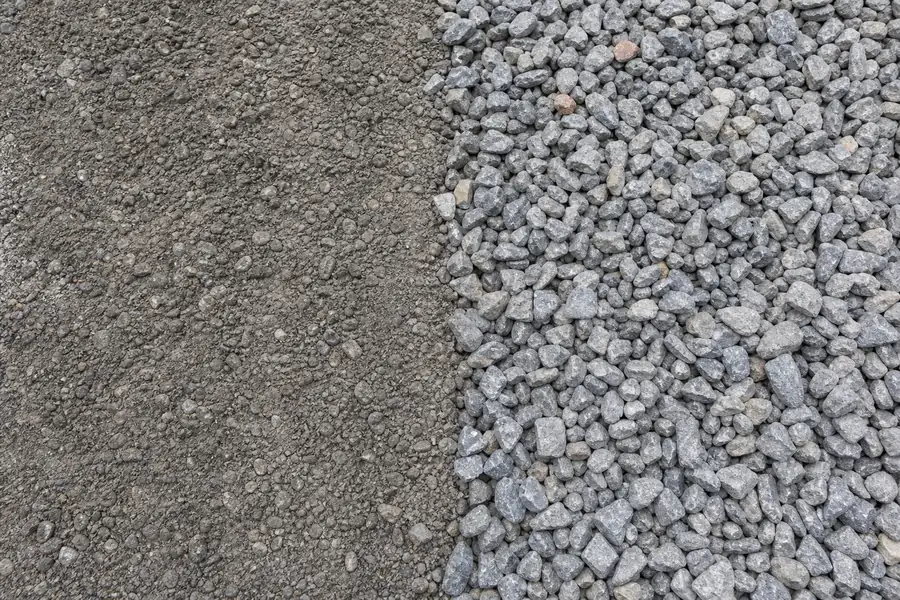
A Texas driveway that ruts after the first good rain usually has the wrong rock in the wrong layer. Crush and run vs 57 gravel is the mix-up that causes it most often: one is a compactable base rock, the other is a loose drainage stone, and swapping their jobs is how a driveway ends up pumping mud through black gumbo clay. Here's what separates them and where each belongs in a Texas driveway build.
Crush and Run vs 57 Gravel at a Glance
The short version: Crusher Run compacts into a dense, load bearing surface, while #57 Stone stays open and loose so water keeps moving through it. Everything else follows from that one difference.
| Attribute | Crusher Run | #57 Stone |
|---|---|---|
| Composition | Crushed limestone with fines | Clean crushed limestone, no fines |
| Particle size | Dust to about 3/4 inch | 3/4 to 1 inch, uniform |
| Compaction | Locks into a dense, solid layer | Stays loose, won't compact |
| Drainage | Low (voids fill with fines) | High (water moves between stones) |
| Best use | Base or cap layer, driving surface | French drains, drainage courses |
| Typical depth | 2 to 4 inches compacted | 3 to 4 inches as a drainage layer |
What Crusher Run Does in a Driveway Base
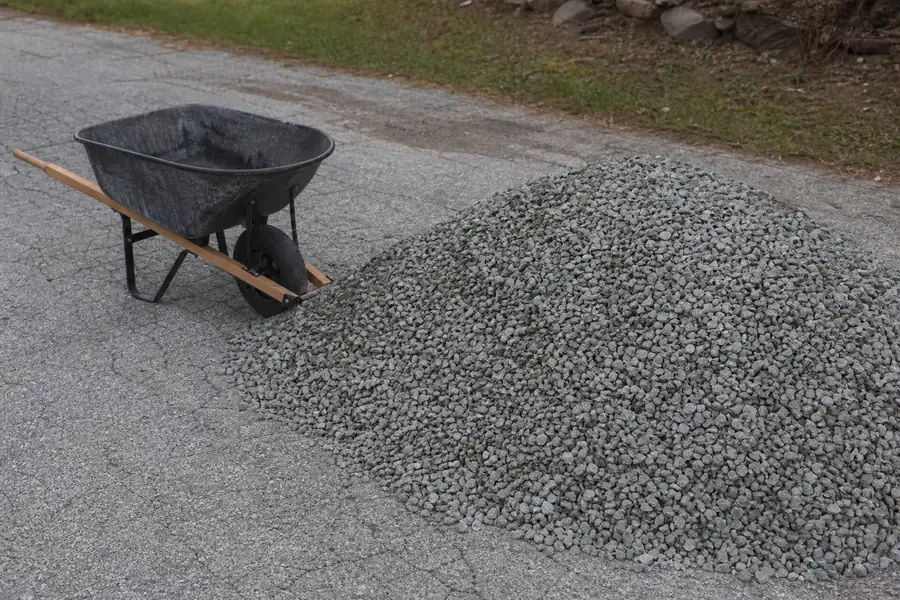
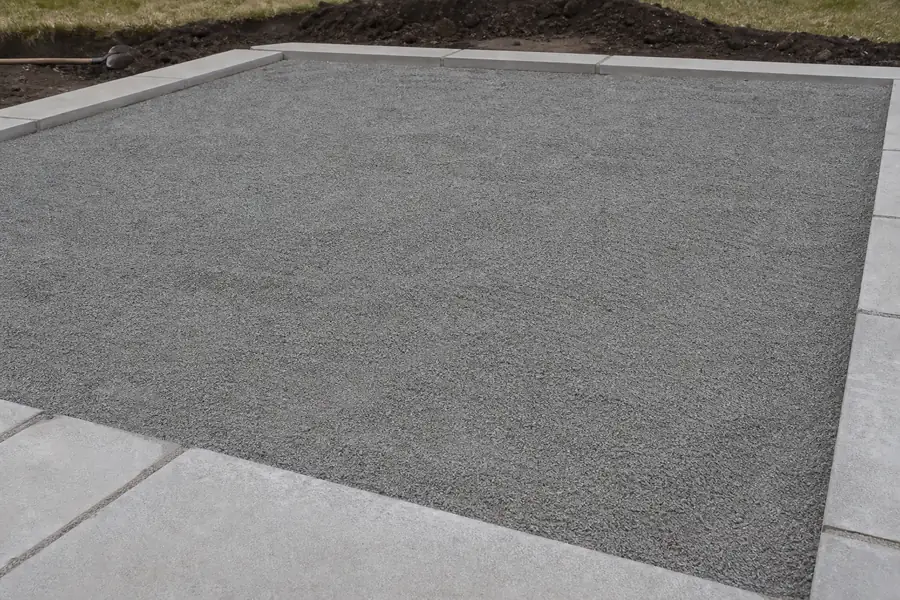
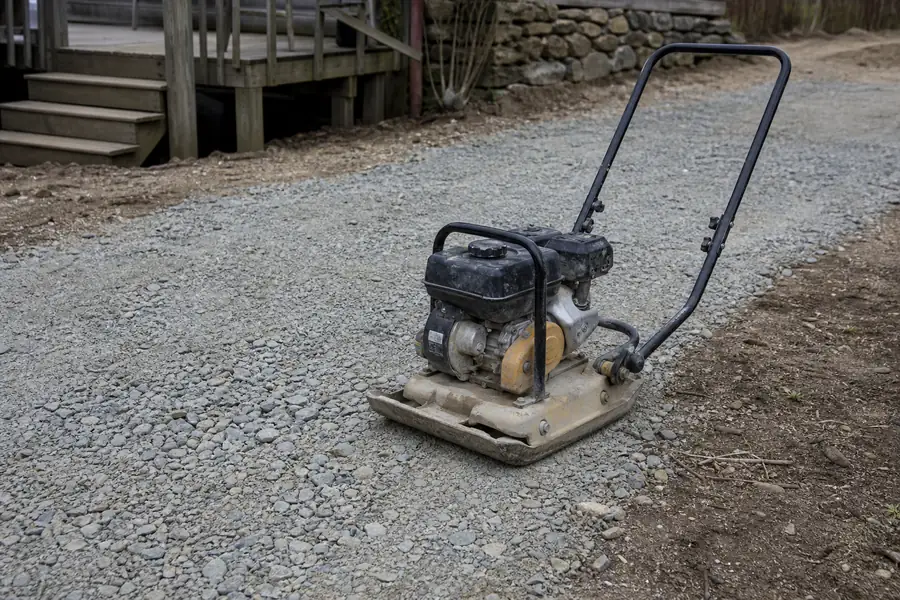
Crusher Run is a crushed limestone material that still has its stone dust and fines mixed in, and that's what lets it compact into a hard, interlocked surface instead of staying loose. The fines fill the gaps between larger stones as a compactor runs over it, squeezing out void space until there's almost nothing left for water to travel through.
That's exactly what you want in a driveway cap or sub-base layer. A well compacted crusher run surface barely shifts under truck tires and sheds rainwater off the crown instead of letting it soak straight down, which matters on the expansive clay common along the I-35 corridor.
What #57 Stone Does for Drainage
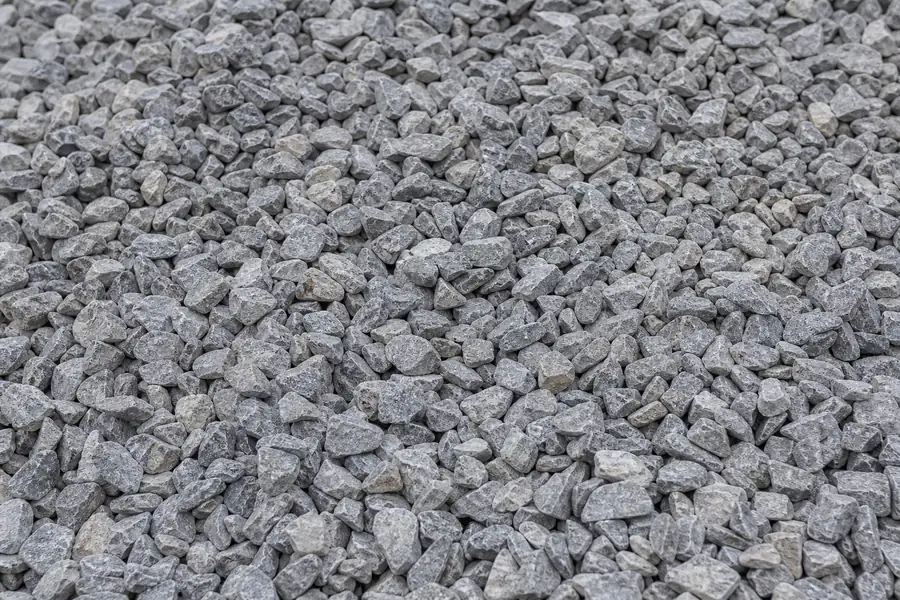
#57 Stone is a washed, open graded crushed limestone sized mostly between 3/4 and 1 inch, with the fines screened out before it ever reaches the pile. That open structure is the entire point: water moves through the gaps between stones rather than pooling on top, which is why #57 Stone is the standard choice for French drains, drainage trenches, and the course underneath a driveway built over clay. Our guide to gravel driveway drainage covers how that layer fits into the bigger picture.
Where crush and run vs 57 gravel gets confused most is right here. Contractors sometimes try to compact #57 Stone expecting it to lock up the way crusher run does, and it never will. It isn't supposed to.
Layer Diagram: Where Each Goes in a Texas Driveway
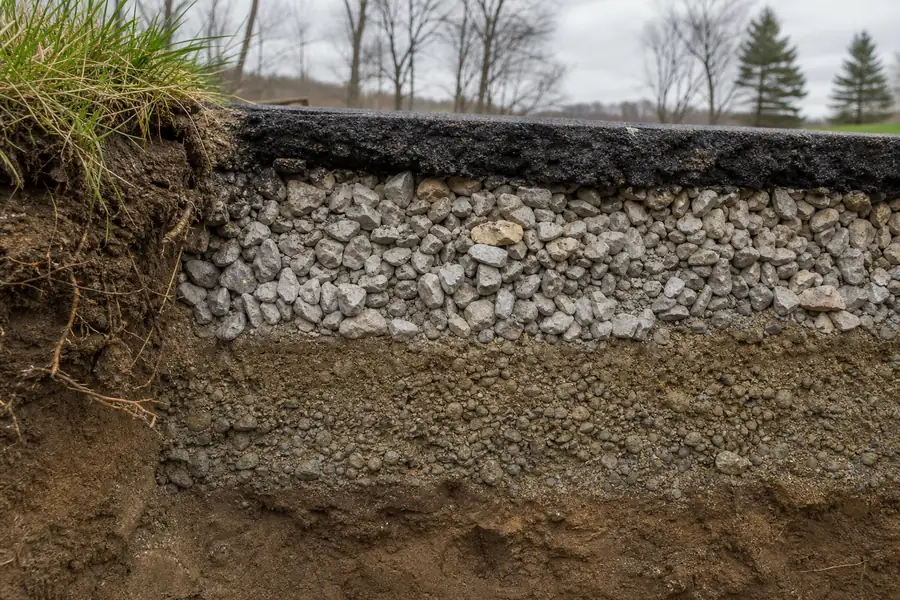
A Texas driveway built over expansive clay works best as four layers, from the subgrade up, and each layer has exactly one job.
- Subgrade: compacted native soil, crowned so water sheds to the sides instead of collecting under the driveway.
- Drainage course (#57 Stone, 3 to 4 inches): sits directly on the subgrade on clay sites so rainwater that works its way under the base has somewhere to go instead of pushing the clay around.
- Structural base (Road Base or Flex Base, 4 to 6 inches compacted): carries the weight of vehicles and keeps the driveway from flexing under load.
- Cap layer (Crusher Run, 2 inches compacted): is the tight, trafficked surface that resists rutting and sheds rain off the crown.
Skip the #57 Stone drainage course on sandy, well draining sites. On the heavy clay found across much of the I-35 corridor, that bottom layer is what keeps the whole driveway from heaving every time it rains.
Crush and Run vs 57 Gravel: How Much to Order
Most Texas driveways need more Crusher Run than #57 Stone, because the cap layer covers the full surface while the drainage course only goes in where the site needs it. A 12 foot wide, 100 foot long driveway takes roughly 9 tons of Crusher Run for a 2 inch compacted cap, and about 13 tons of #57 Stone for a 3 inch drainage course underneath it, if the soil calls for one.
Price per ton for the two materials tends to sit close together. Freight from the quarry to your site usually moves the total more than the rock itself, especially outside the Dallas, Houston, and San Antonio triangle. Run your own driveway dimensions through the crusher run calculator before you order, since depth and width change the tonnage fast.
FAQs
Can I use #57 Stone instead of crusher run for a driveway base?
No. #57 Stone is open graded and won't lock together under a compactor, so it stays loose and shifts under vehicle weight. Crusher run includes fines that let it compact into a dense, stable surface, which is why it's the correct choice for a driveway cap or base.
Can crusher run be used in a French drain?
No. The fines in crusher run fill in and clog a drain over time, defeating the purpose of the trench. #57 Stone or drain rock stays open and keeps water moving, which is what a French drain needs.
Does every Texas driveway need a drainage layer under the base?
Not every one. Sandy or well draining sites can skip the #57 Stone drainage course and go straight from subgrade to road base. Sites with heavy clay, common along the I-35 corridor, generally hold up better with that drainage layer in place.
How deep should crusher run be on a driveway?
Most Texas driveways use a 2 to 4 inch compacted layer of crusher run as the cap, sitting on top of a 4 to 6 inch compacted road base. The exact depth depends on the soil underneath and how much vehicle traffic the driveway sees.
Is crusher run the same thing as road base?
No. Road base (flex base) is a coarser structural layer that carries most of the load, while crusher run is a finer material that compacts into a tight cap on top of it. Many Texas driveways use both, with road base below and crusher run as the finished surface.