Flex Base in Texas: What TxDOT Item 247 Means for Your Driveway
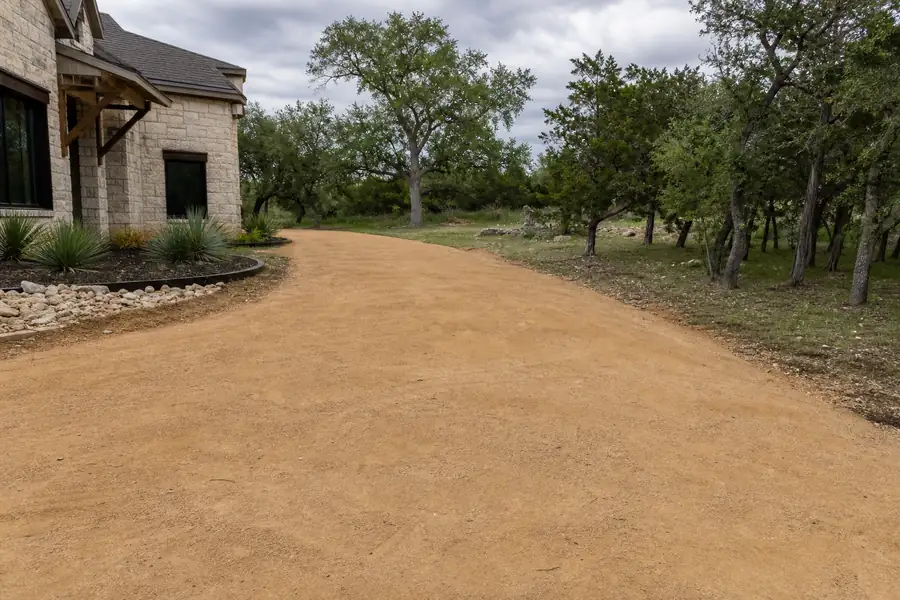
Ask a Texas contractor what goes under a driveway and you'll hear "flex base" before anything else. Ask why, and the answer is usually TxDOT Item 247, the spec that governs how this material is graded and compacted on state road projects. That spec matters to your driveway too, even though nobody is inspecting it with a state clipboard.
Here's what Item 247 actually controls, how it should translate to a residential job, and how flex base compares to the other base rock sold in Texas.
What Is Flex Base in Texas?
Flex Base is crushed limestone or caliche aggregate blended with fine material that locks together under compaction, forming a dense but slightly flexible driving surface. It's the standard base rock under Texas roads, ranch roads, driveways and parking pads because it compacts hard, drains reasonably well, and shrugs off the flexing that expansive clay soils cause across the state. Quarries in Central and North Texas produce it from local limestone; in South and West Texas it's often caliche. You'll also hear it called flexible base, Grade 1 through Grade 4 material, or caliche base, and it's sold here as Flex Base.
TxDOT Item 247 and Flex Base in Texas
TxDOT Item 247 sets the gradation, plasticity and compaction requirements that flex base has to meet before it's approved for use under a Texas road, which is also why it performs so well under a driveway. Gradation controls the mix of particle sizes, from coarse rock down to fine dust, so the material packs tight instead of leaving voids. Plasticity index limits how much the fine material swells when it gets wet, which matters enormously here given how much Texas clay moves with moisture. Compaction requirements set the density the finished base has to reach, typically measured as a percentage of the material's maximum dry density.
Within Item 247, different grades cover different particle sizes and intended uses, with the coarser grades generally reserved for higher-load roadwork. Most residential driveway and pad jobs run on the same general-purpose flex base sold for ranch roads and parking areas, and you don't need to specify a grade number to get material that performs the way the spec intends.
How Thick Should Flex Base Be for a Texas Driveway?
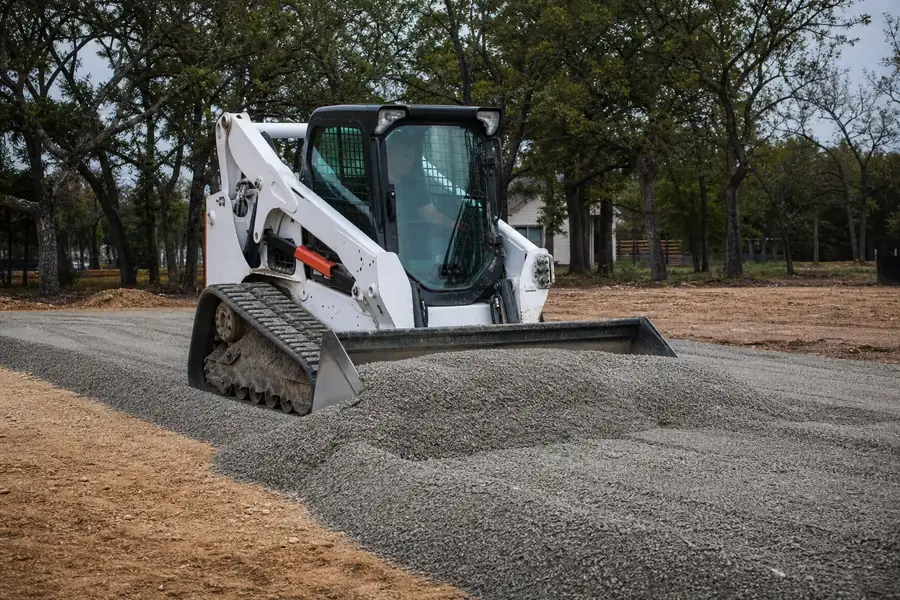
Most residential driveways need 4 to 6 inches of compacted flex base, with heavier vehicles or expansive clay soils pushing that to 6 to 8 inches. Texas doesn't have a frost problem, the frost depth here is only about 6 inches, so base thickness is driven by load and soil movement, not freeze-thaw cycling. Along the I-35 corridor, black gumbo and other expansive clays shift several inches a year with moisture swings, and a thin base flexes and cracks whatever sits on top of it faster than traffic wears it out.
| Use case | Compacted depth |
|---|---|
| Car and pickup driveway | 4-6 inches |
| RV or heavy truck driveway | 6-8 inches |
| Caliche ranch road | 4-6 inches |
| Livestock pen or heavy equipment pad | 6-8 inches |
Compact flex base in lifts of 4 inches or less, wetting it slightly before rolling. A base laid too thick in one pass compacts unevenly at the bottom, and that soft layer is exactly where a driveway starts to rut.
Flex Base vs Crushed Limestone Base in Texas
Flex Base and Crushed Limestone Base both compact into a solid driving surface, but they're not interchangeable on every job. Flex Base carries more fine material and a wider particle size range, which is what lets it lock down tight and hold up under vehicle loads on driveways and roads. Crushed Limestone Base (sometimes called cement stabilized base) runs a bit more uniform and is often chosen where a firmer, more consistent compacted surface is wanted, such as under pavers or a shed pad. For a standard driveway, ranch road, or parking area, flex base is the material Texas contractors reach for first.
How to Order Flex Base in Texas
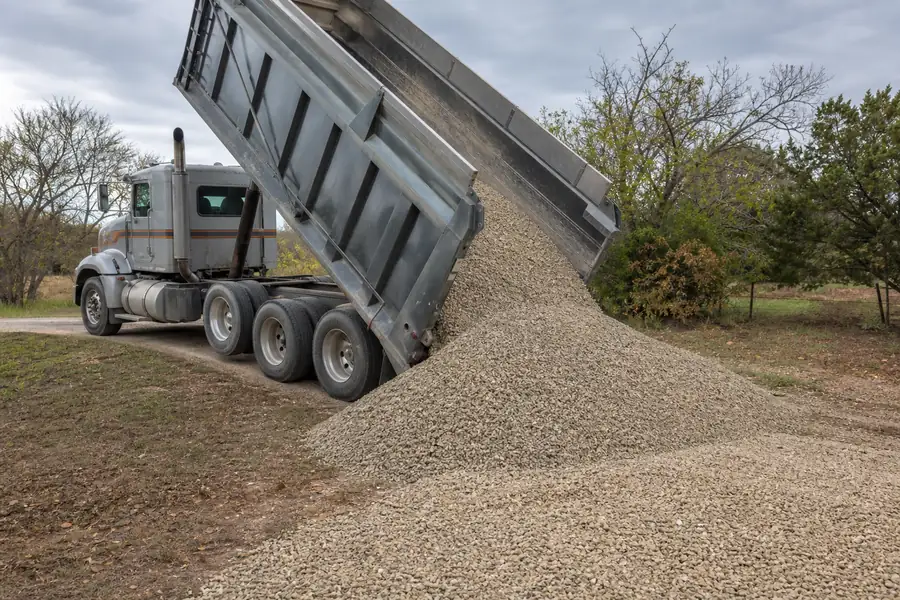
Flex base is sold and delivered by the ton, and the amount you need depends on the square footage of your driveway and how deep you're compacting it. A rough starting point: one ton covers about 80 to 100 square feet at a 4 inch compacted depth, though exact coverage varies with the specific material's density. Run your numbers through the road base calculator before you order so you're not short a load partway through the job.
Price per ton depends on quantity and how far the load has to travel. Inside the Dallas, Houston and San Antonio triangle, freight is short and material cost drives the price. Outside it, in West Texas or the Panhandle, freight distance usually matters more than the rock itself. Texas Rock Supply delivers flex base to cities across Texas, so pricing is quoted live based on your project location and tonnage rather than a flat rate.
FAQs
Is flex base the same as road base?
Yes. Flex base and road base are the same material, a crushed limestone or caliche aggregate that meets TxDOT's flexible base specification. The terms are used interchangeably across Texas, along with flexible base and caliche base.
Can I use flex base without a topcoat?
Yes, plenty of ranch roads, driveways and parking pads in Texas run on compacted flex base alone with no asphalt or gravel topping. It holds up fine under regular traffic as long as it's compacted properly and graded to shed water, though a gravel or asphalt surface will cut down on dust and rutting over time.
How long does flex base take to compact and cure?
Mechanical compaction happens the same day, in lifts of 4 inches or less, and the surface is drivable almost immediately after rolling. It continues to lock together and harden with traffic and moisture over the following weeks, which is normal and expected.
Does flex base work in Texas clay soils?
Yes, flex base is the standard base material specifically because it handles Texas's expansive clay better than most alternatives. A properly compacted 4 to 6 inch base resists the shifting that black gumbo and other reactive clays cause across the I-35 corridor, though grading the site so water drains away from the base matters just as much as depth.
What is TxDOT Item 247?
TxDOT Item 247 is the Texas Department of Transportation specification that sets the gradation, plasticity and compaction standards flex base has to meet for use on Texas roadways. Material that meets this spec is also what's used under most Texas driveways, ranch roads and parking pads because it's proven to perform under vehicle loads and shifting clay soils.

Fifteen years in bulk aggregate supply taught Derek Malone to ask the boring questions before the expensive ones: how deep, how much, what's underneath. He works out of Kansas City, scheduling deliveries through winters that freeze the ground solid and summers dry enough to crack it. That swing is why he treats climate as part of the math, not an afterthought. He's seen enough driveways fail within a year to know a good-looking stone and a good stone aren't always the same thing.