Building on Black Gumbo Clay: Base Depth and Drainage in Texas
Quick answer: Most driveways, patios and pads built on black gumbo clay need a 6 to 8 inch compacted base and grading that slopes water away at 1/4 inch per foot. Skip either one and the clay underneath will swell, shrink and crack whatever you built on top within a couple of seasons.
Black gumbo clay covers much of the Blackland Prairie and the I-35 corridor, from San Antonio through Austin and up into Dallas-Fort Worth, and it's the reason so many Texas slabs, driveways and ranch roads fail early. This clay swells when it's wet and shrinks hard when it dries, and that movement does more damage to a base course than Texas' mild frost ever will. Get the base depth and black gumbo clay drainage right before you build, and the clay stops being the weak link in the project.
What Makes Black Gumbo Clay So Hard to Build On
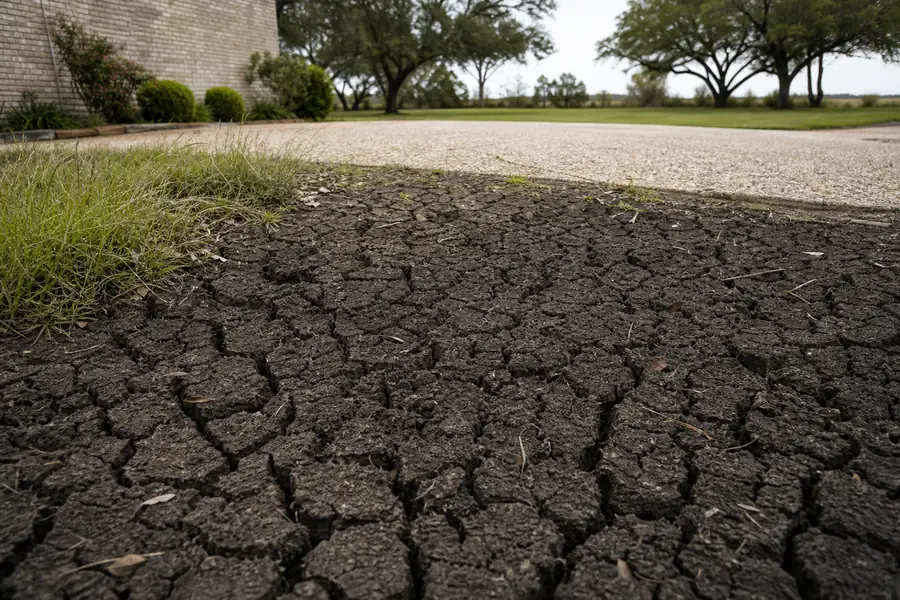
Black gumbo clay is a heavy, high-plasticity clay common across Texas cities along the I-35 corridor, and it behaves nothing like sandy or rocky soil found elsewhere in the state. It absorbs rainwater and swells, then dries out in summer heat and shrinks hard enough to open cracks you can drop a hand into. That swell-shrink cycle can shift the ground several inches over a single year in a wet-to-dry swing.
Frost depth barely factors in here. Texas frost only reaches about 6 inches down, and it's a non-issue compared to what expansive clay does to a foundation or base course. The real engineering problem is moisture, not cold, and every decision on base depth and drainage should be made with that in mind.
How Deep Should Your Base Be on Black Gumbo Clay
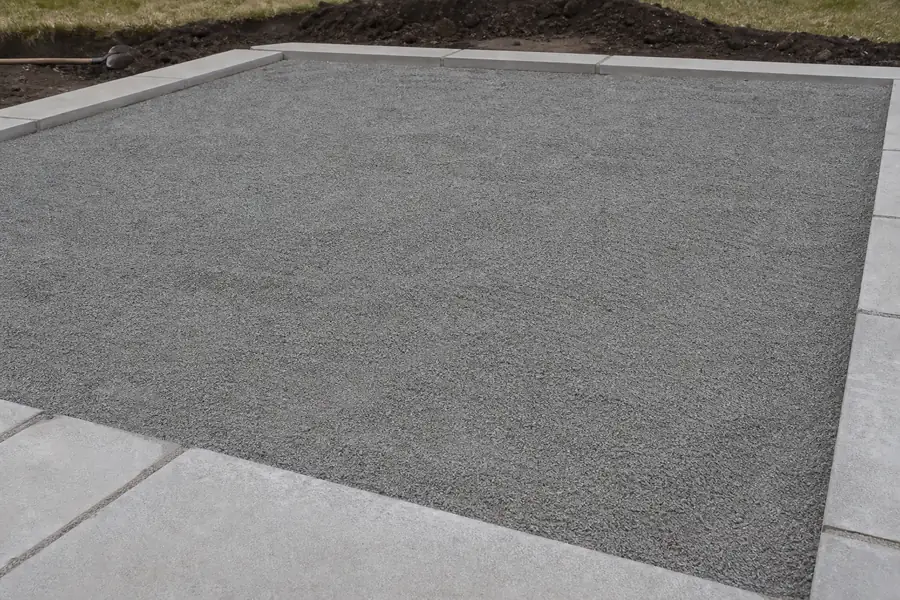
Most projects on black gumbo clay need a compacted base 6 to 8 inches deep, roughly double what a stable sandy soil requires elsewhere in Texas. The base course acts as a buffer that spreads load and keeps surface water from reaching the clay directly, so skimping on depth is the fastest way to see a driveway rut or a patio heave within a year or two.
| Project | Typical base depth | Material |
|---|---|---|
| Residential driveway | 6-8 inches | Flex Base |
| Patio or walkway | 4-6 inches | Crushed Limestone Base |
| Shed or outbuilding pad | 6 inches | Flex Base |
| Caliche ranch road | 8-10 inches | Flex Base |
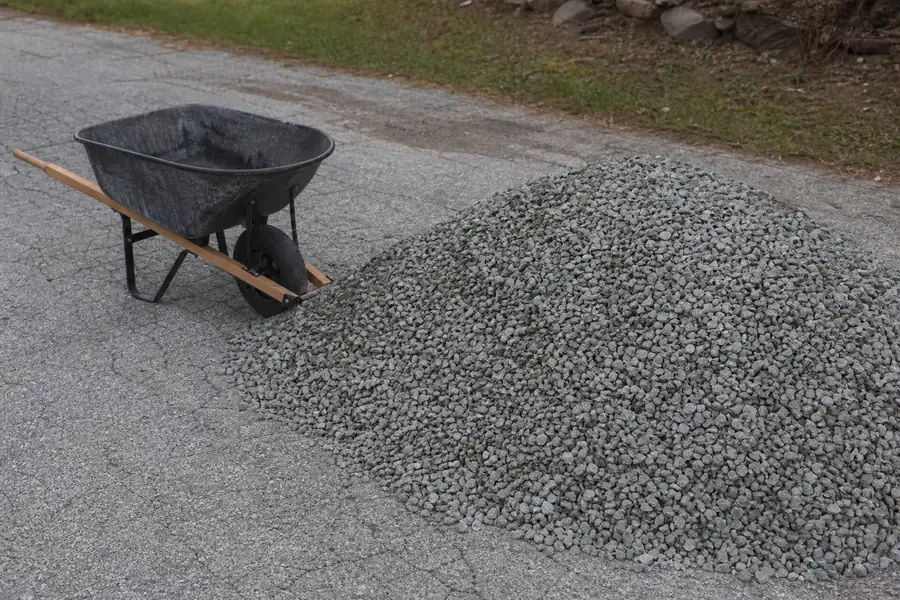
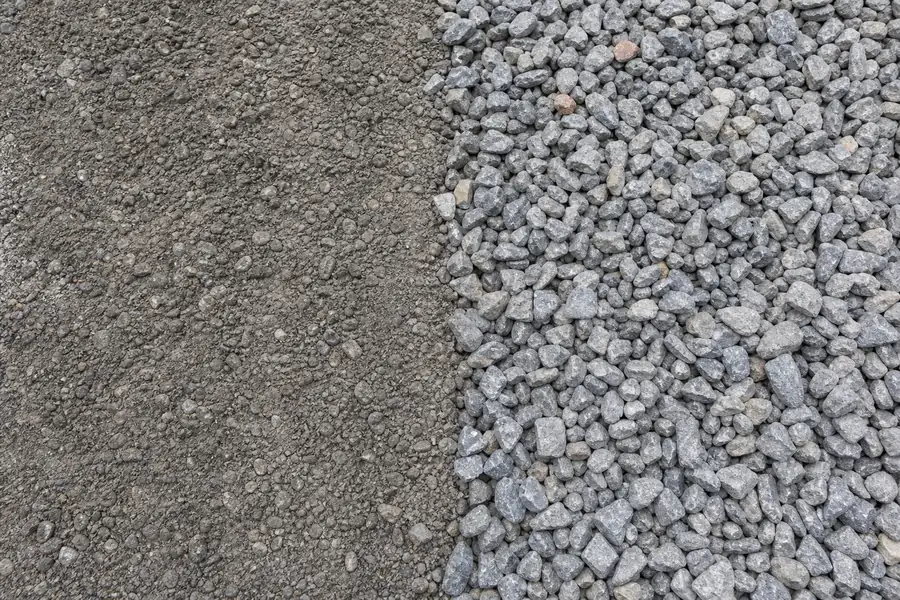
Flex Base is the standard choice for driveways and ranch roads because it compacts into a dense, near-solid layer that sheds water instead of absorbing it. For lighter foot traffic, Crushed Limestone Base compacts a bit finer and works well under a patio or walkway. On both, laying a geotextile fabric between the raw clay and the base course keeps the two from mixing over time, which is what causes a base to lose its compaction and go soft.
Drainage Solutions for Black Gumbo Clay
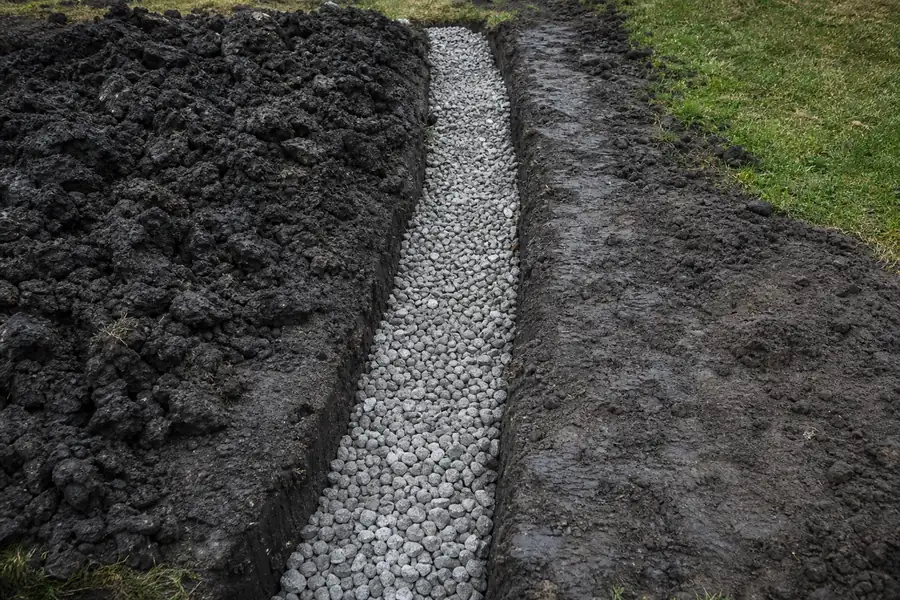
The single biggest fix for black gumbo clay drainage is moving water away from the base before it ever reaches the clay, since standing water is what triggers the worst swell-shrink damage. Grade the finished surface at a minimum of 1/4 inch of fall per foot, running away from any structure for at least 10 feet.
Where the lot is flat or water collects in a low corner, a French drain does the work grading can't. A French drain is a gravel-filled trench with a perforated pipe that carries water off to a lower discharge point instead of letting it pool against a foundation or base course. Fill the trench with Drain Rock around the pipe so water moves through freely instead of getting trapped by the surrounding clay.
If the yard slopes toward the house or a low spot won't drain no matter how it's graded, bringing in Fill Dirt to rebuild the grade is usually cheaper than fighting the clay with drainage alone. Raise the low point, compact it, then grade and add the base course on top.
Choosing the Right Base Material for Expansive Clay
Flex Base compacts tighter and sheds water better than any raw soil, which is why it's the standard base material for driveways and ranch roads across gumbo clay country. Crushed Limestone Base is the better pick where you want a finer, more even surface, like under a patio or a walkway that will get pavers on top.
Neither material fixes a drainage problem on its own. Base depth handles the load and keeps the surface stable, while grading and drains handle the water that would otherwise undermine it. Run your square footage and depth through the road base calculator before ordering so you're not short a few inches on delivery day, since a thin spot in the base is exactly where a black gumbo clay driveway starts to crack first.
FAQs
How much does black gumbo clay move in a year?
Black gumbo clay can shift several inches between a wet spring and a dry summer, more in drought years. That movement is why a shallow base or a slab poured directly on the clay tends to crack within a season or two, while a properly graded and based project holds up for years.
Do I need a French drain on gumbo clay?
Not always, but you need one anywhere water collects instead of running off. If grading alone can't move water away from a foundation, driveway or low corner of the yard at 1/4 inch of fall per foot, a French drain filled with drain rock is the fix.
Can I build directly on black gumbo clay without a base?
No. Building directly on black gumbo clay without a compacted base course means the surface will move with every wet-dry cycle, cracking driveways, patios and pads within a year or two. A 6 to 8 inch base of Flex Base or Crushed Limestone Base is the minimum for most residential projects.
What's the difference between flex base and crushed limestone base for clay soil?
Flex Base compacts into a denser, more load-bearing layer and is the better choice for driveways and ranch roads. Crushed Limestone Base compacts finer and suits lighter-use areas like patios and walkways where a smoother finished surface matters more than heavy load capacity.
How do I know if my lot has black gumbo clay?
If the soil is dark, heavy and sticky when wet, and cracks into wide fissures when it dries out, that's black gumbo clay. It's common across the Blackland Prairie and the I-35 corridor, so most lots in that stretch of Texas will have it at some depth.