#67 Stone: Washed 1/4 to 3/4 Inch Rock for Texas Trenches
#67 Stone fits Texas drainage work, concrete mixes, and landscape surfaces where angular crushed material is wanted around moving clay soils.
- Size: 1/4 inch to 3/4 inch
- Grading: #67
- Type: Angular crushed stone
From $498 for 1 ton, delivery included (larger loads cost significantly less per ton)
Free delivery included
Free delivery anywhere in Texas
Pick a delivery date
Weekday delivery, earliest Oct 27
“Ordered stone from these guys and it was super easy. Delivery showed up when they said it would, and the stone looked great. I'd definitely use these guys again.”
Paul P. · Verified Buyer
Get a Free Quote
Fill out the form and our sales team will get back to you within the hour.
Size and Grading
- Size
- 1/4 inch to 3/4 inch
- Grading
- #67
- Type
- Angular crushed stone
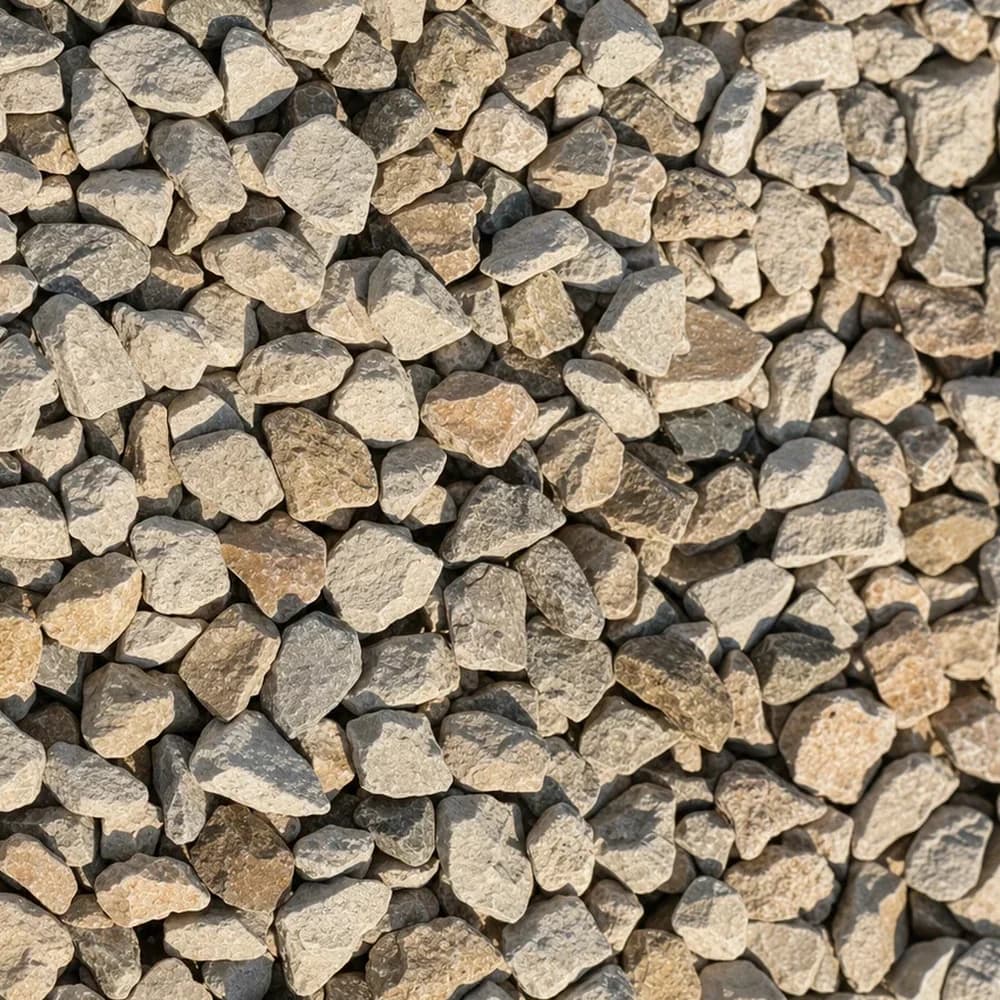
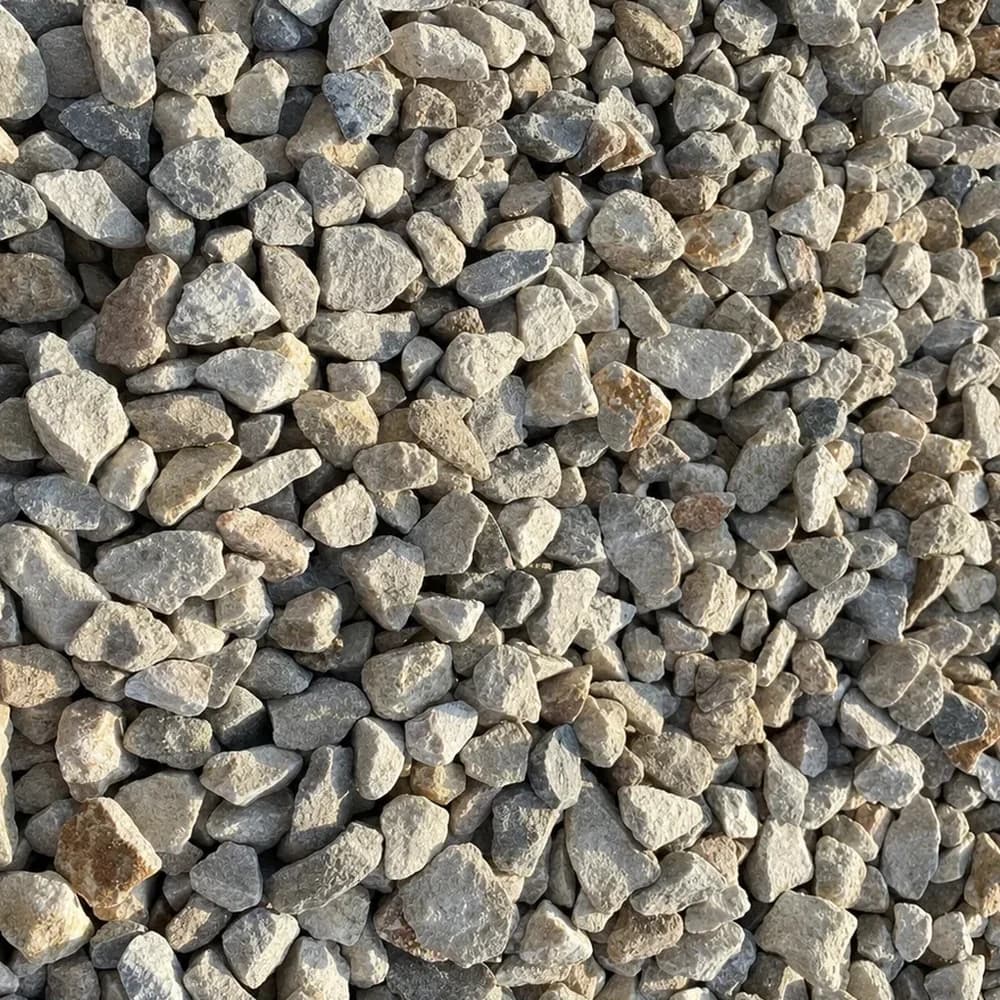
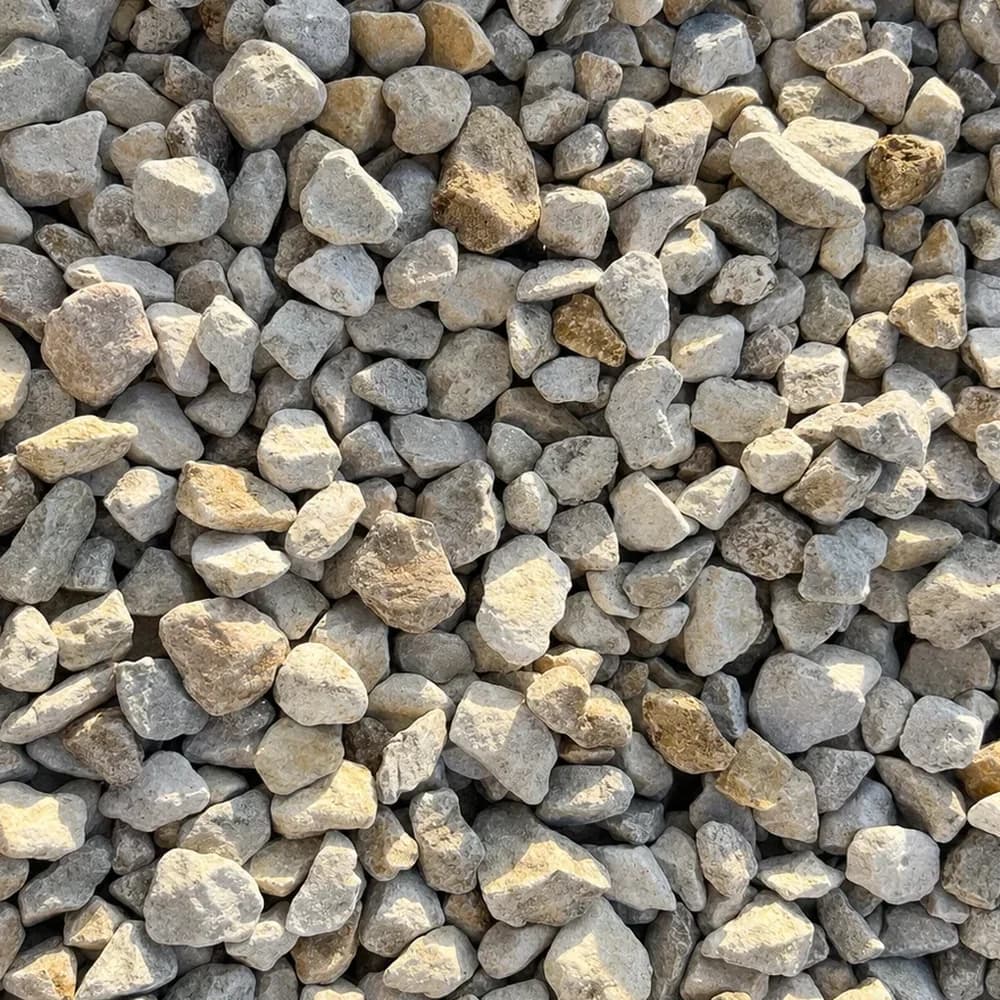
Black gumbo clay across the Blackland Prairie takes water in slowly and gives it back slower still, which is why a trench cut through it only works if what goes in the trench keeps its own spaces open. Pack fines into that cut and you have built a clay-lined tube that fills with silt by the second wet season. #67 stone is the washed gradation bought to avoid exactly that: angular crushed limestone running from about a quarter of an inch to three quarters, with the dust taken out, so the pieces touch at their corners and leave connected voids between them for water to travel through.
What a quarter-to-three-quarter spread looks like in the bucket
Pieces are small enough to handle by the fistful and big enough to read individually in a bed. The faces are fresh-broken and angular rather than water-worn, so the material has a bright, sharp look next to rounded stone and stays crisp at an edge instead of slumping.
The narrow size band is the useful part. Everything in the load sits within one range, so a shovelful behaves the same way as the load behind it: predictable to spread, predictable in a trench, and predictable in a concrete mix, which is why a batch plant and a drain contractor order the same gradation.
Why a Blackland Prairie trench takes #67 stone and not a base material
Three places on a Texas property where it belongs:
- French drains and perimeter drains. Bed the pipe on it and surround the pipe with it, so water reaches the line from every side. The quarter-inch lower end limits how easily fine silt migrates in compared with a coarser rock.
- Pipe, conduit and utility bedding. The small pieces settle around a curved pipe and hold it evenly along its length, which matters where clay above will be swelling and shrinking on top of the run.
- Beds, tree rings and edging. Angular pieces sit against each other and hold a defined line, so a planter edge still reads as a line after two summers.
Concrete work is the fourth. The gradation goes into mixes where a workable batch and a finer surface texture are wanted, which is the same reason it suits exposed and decorative pours.
The sizes either side change the job rather than the price. #57 Limestone runs 3/16 inch to 1 inch, so it holds bigger voids and suits a wider trench or a deeper drainage layer. Drain rock is the pick behind a wall or in a drywell. Anything meant to carry weight rather than water goes the other direction entirely, to a graded material such as Flex Base with fines running through it.
Two places it will disappoint: a ditch outlet and a regraded low spot
Where water leaves a culvert after a flash-runoff event, stone this size travels. That is a job for mass, and mass means RipRap sized to the flow, set on a shaped bed with the toe buried. A ditch lining built from quarter-inch to three-quarter-inch rock ends up in a heap thirty feet downstream.
Regrading a low spot is the other one. Take a dip 25 feet by 20 feet averaging four inches deep: 500 square feet, then 500 x 4 ÷ 12 = 166.7 cubic feet, and 166.7 ÷ 27 = 6.2 cubic yards. Buying six yards of washed rock to fill a hollow in a lawn buries good drainage stone under grass that cannot root into it. That volume belongs to Fill Dirt with screened topsoil over the top.
Sizing the trench and the bed around a four-inch drain line
A drain is a rectangle on its side, so the arithmetic is the same shape as any other.
For a run 60 feet long, a trench 18 inches wide and 12 inches deep: 60 x 1.5 = 90 square feet of trench footprint, and at one foot deep that is 90 cubic feet, which is 90 ÷ 27 = 3.3 cubic yards. This site publishes roughly 2,800 lb per cubic yard for #57 and #67 crushed stone, about 1.40 tons per yard, so 3.3 x 1.40 puts the run at approximately 4.6 tons. The pipe itself displaces a little, so most crews order the full figure and use the surplus at the outfall. Around a xeriscape bed of 180 square feet at two inches, the sum comes out at 180 x 2 ÷ 12 = 30 cubic feet, or 1.1 cubic yards. Both are worked examples rather than installed jobs, so measure your own run and put it through the stone calculator for tonnage and the five percent it adds by default.
Depth guidance in a trench comes from the pipe, not from a table: three to four inches of stone under the pipe, stone right up the sides, and at least six inches over the crown before the fabric wrap folds closed.
Holding it at an edge and on a Hill Country slope
Loose washed stone does not hold a slope on its own, and Texas runoff arrives in volume rather than in drizzle. Two things fix it. Give the run a defined edge, steel or stone set proud of the surface, so there is something for the material to push against. Then break the fall: a shallow check or a wider apron at the bottom slows the water before it reaches the last few feet, which is where washouts always start.
In a bed, keep the layer thin enough that stone does not slide over stone. Two inches over fabric holds; four inches on a grade will creep. When your figure is settled, pick a quantity and a delivery date at checkout, where the ZIP sets the delivery, and confirm the truck has clear access to the drop before the load is scheduled. Coverage by ZIP is set out on the Texas delivery areas page if you want to check that first.
Quickly Calculate How Much You Need
Material: #67 Stone
How to Measure
Measure the length and width of your project area in feet
Decide on depth in inches (2" for landscaping, 4" for driveways)
Enter the values above and we'll calculate the tonnage you need
Need help figuring out the right amount? We can help!
Call or text us at (512) 412-3378 and we'll help you calculate the right quantity for your project.
Not sure how much you need? The Stone Calculator has depth guides, coverage charts and worked examples for this material.
Frequently Asked Questions About #67 Stone
Customer Reviews
Grabbed a load of stone from the team and it showed up right as planned, super happy with it.
Kim P. · Fort Worth, TX · Verified Buyer
Got stone from them and ordering was painless, couldn't be happier.
Susan D. · El Paso, TX · Verified Buyer
Picked up on a load of stone from these guys and everything went smooth. I'd definitely order again and recommend them.
Doug N. · Austin, TX · Verified Buyer
Ordered stone from these guys and it was super easy. Delivery showed up when they said it would, and the stone looked great. I'd definitely use these guys again.
Paul P. · El Paso, TX · Verified Buyer
Straightforward and Helpful
From ordering through delivery, Texas Rock Supply was easy to work with. The #67 stone was consistent and easy to use. Good communication and a very positive overall experience.
Tara S. · Dallas, TX · Verified Buyer
#67 Stone has 5 verified customer reviews with an average rating of 4.8 out of 5.