#10 Stone Screenings for Bedding Pavers and Flagstone in Texas
For a Texas patio or pad, Stone Screenings can level the prepared base before pavers, stone, or concrete work begins.
- Size: 1/4 inch minus
- Grading: Stone dust and fine particles
- Type: Angular crushed stone
From $498 for 1 ton, delivery included (larger loads cost significantly less per ton)
Free delivery included
Free delivery anywhere in Texas
Pick a delivery date
Weekday delivery, earliest Oct 27
“Needed stone screenings for a project at home, and Texas Rock Supply made it super easy. Delivery came exactly when expected, and I'm really happy with the stone screenings.”
Ryan M. · Verified Buyer
Get a Free Quote
Fill out the form and our sales team will get back to you within the hour.
Size and Grading
- Size
- 1/4 inch minus
- Grading
- Stone dust and fine particles
- Type
- Angular crushed stone
Sand or screenings under the flagstone is the choice most Hill Country patio builders are weighing when they land here, and on ground that swells through a wet spring and shrinks back through August the answer leans one way. Stone screenings are the crushing plant's finest output: 1/4 inch minus, angular particles running all the way down into stone dust. Wet them, screed them and compact them and they knit into a firm, level seat that holds a paving unit where you set it, which is more than loose sand will do once water has been moving underneath it for a season.
Gray dust that packs like a floor and looks nothing like gravel
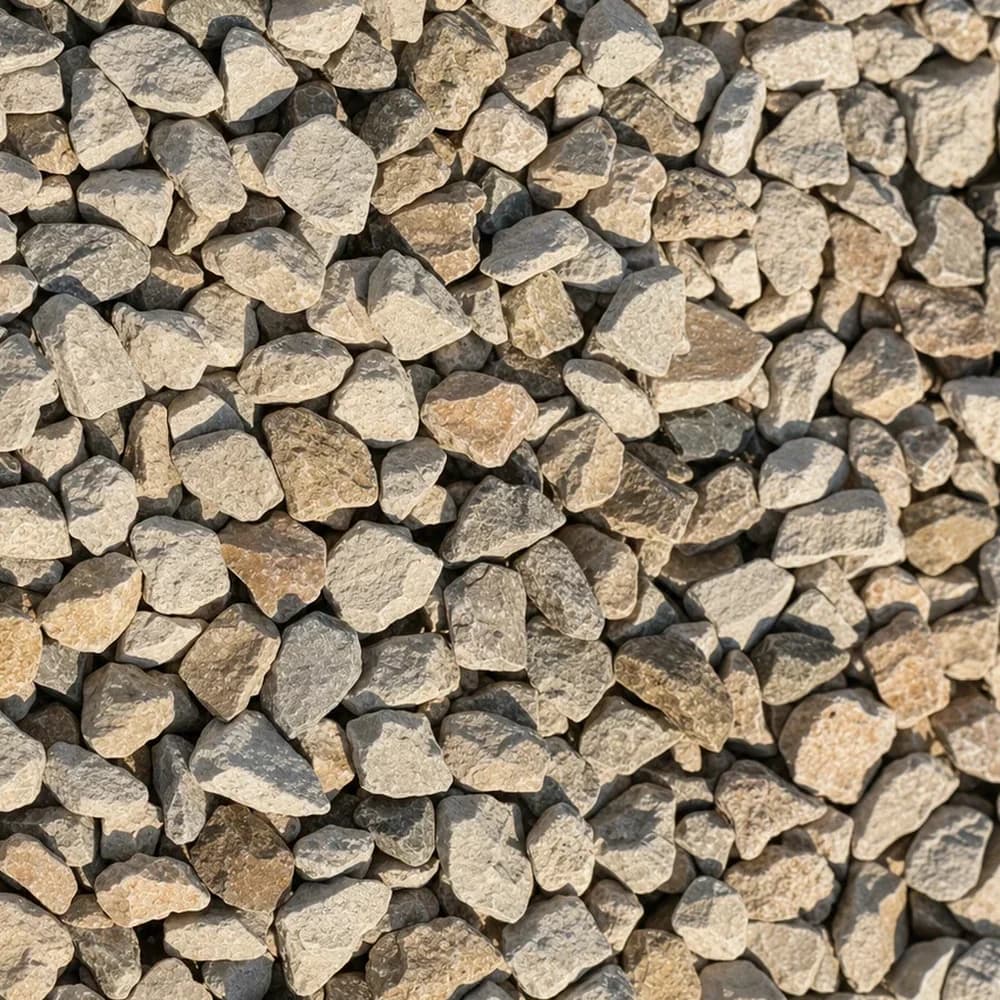
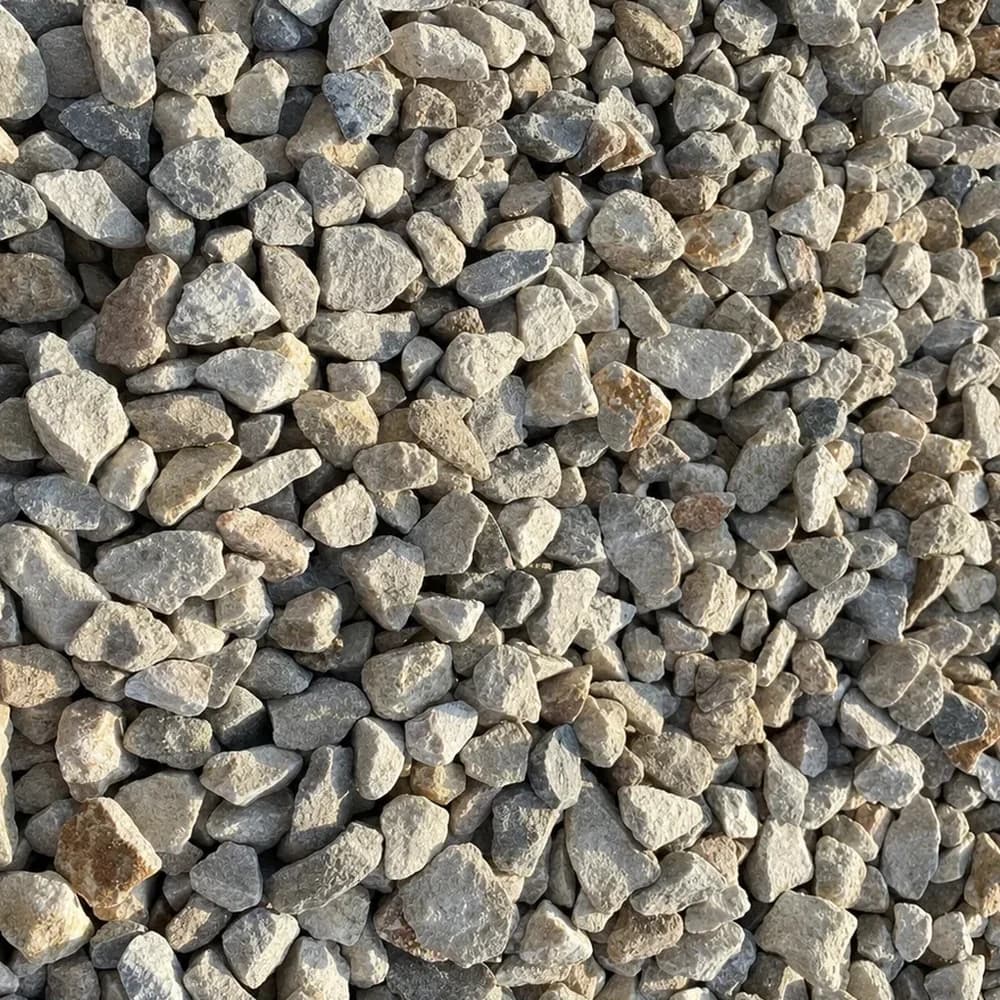
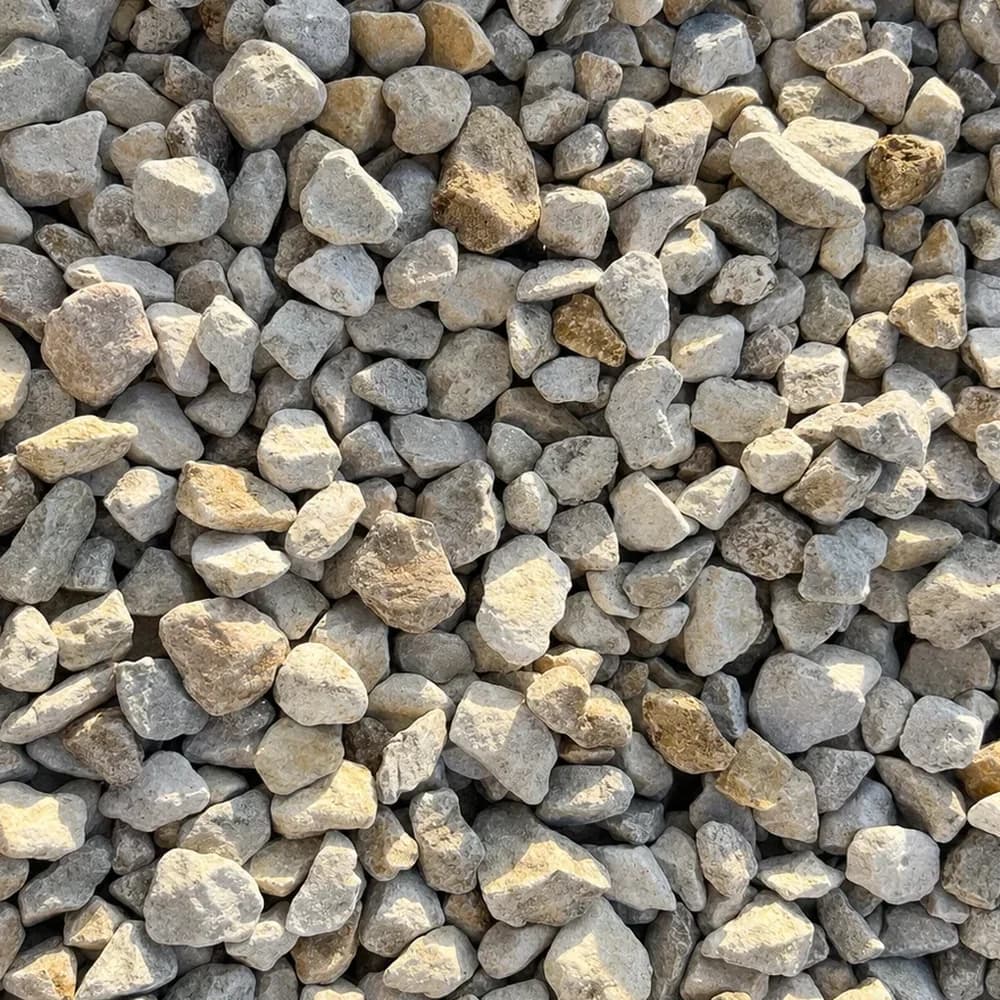
Out of the pile this material reads as damp gray powder with grit through it. There is no stone to see at arm's length and none of the open texture of a drainage rock. That appearance throws people who expected something resembling gravel, and it is worth knowing before the load arrives so nobody thinks the wrong product turned up.
Once it is wetted and compacted the surface goes tight and even, closer to a hard floor than to a stone bed. Angular faces and fines fill every void between each other, which is exactly why it screeds so flat and exactly why water will not travel through it.
Bedding flagstone and sweeping joints on a Hill Country patio
The material has three jobs it does better than anything else on the range.
- Bedding course. An inch of screenings screeded over a compacted base gives flagstone or pavers a seat that takes up the small irregularities on the underside of each unit.
- Joint filling. Swept into the gaps between flagstone and brushed in with a broom, it packs down and holds the units against shifting while keeping mud and seedlings out of the joints.
- Leveling before a pour. Worked over a prepared subbase it takes the humps out before concrete, a shed floor or a hot tub frame goes down.
In every one of those it is the finishing layer, not the structure. A compacted crushed limestone base carries the load underneath; the screenings only make the seat.
Two jobs it gets bought for by mistake: a ditch outlet and a xeriscape bed
A culvert outlet or a ditch lining wants mass. Water leaving a pipe at speed after a Gulf downpour will take fine material with it on the first storm, and all the compaction in the world does not change that. Armoring a ditch or an outfall is what RipRap is for, sized to the flow rather than to the look.
A xeriscape or rock garden bed is the opposite problem. Screenings hold water at the surface once compacted and go slick when wet, which is not the free-draining, open look a rock garden is after. A 180 square foot bed at two inches would take 180 x 2 ÷ 12 = 30 cubic feet, or 1.1 cubic yards, and it would sit as a gray pan rather than a stone bed. Texas River Rock or a washed crushed stone reads far better and drains properly.
How thick the bed sits before and after the plate compactor
Depths are quoted loose, and screenings lose noticeable volume under a compactor, so order to the loose figure and expect the finished layer to be thinner.
| Where it goes | Loose depth | Notes |
|---|---|---|
| Paver or flagstone bedding | 1 to 1.5 inches | Screed it, do not compact it before the units go down |
| Joints between flagstone | Fill to the surface | Sweep in, wet, top up, repeat |
| Leveling before a pour | 1 to 2 inches | Compacted in place before the concrete |
| Light service path | 2 inches | Wet and compact in one layer |
A bedding course is the exception to the compaction rule. Screed it flat, set the stone into it, then compact the whole assembly afterwards so each unit beds itself. Compacting the screenings first gives you a hard surface the units just sit on top of, and every high corner stays high.
Filling a 300 square foot low spot in the back yard
Low spots are where this material gets over-ordered. Take a dip roughly 20 feet by 15 feet, averaging three inches below grade. That is 300 square feet, then 300 x 3 ÷ 12 = 75 cubic feet, and 75 ÷ 27 = 2.8 cubic yards.
Buying that in screenings is usually the wrong call. A regrade is bulk work, and bulk volume belongs to Fill Dirt with topsoil capping it so grass can root. Screenings earn their place in a regrade only where the finished surface is going to be hard: a level pad for a shed, a cart route, a landing at the bottom of steps. For the patio itself, a 14 by 16 foot bedding course at one inch is 224 square feet, 224 x 1 ÷ 12 = 18.7 cubic feet, which is 0.69 of a cubic yard. This site publishes roughly 2,900 lb per cubic yard for screenings, about 1.45 tons per yard, so 0.69 x 1.45 is approximately 1.0 ton. These are worked examples rather than real jobs, so put your own measurements through the stone calculator and take the tonnage from there.
What sits above and below stone screenings on Texas clay
Under it goes a compacted base, always, because a bedding layer has no structural value of its own and clay that moves will take an unsupported patio with it. Over it go the pavers, the flagstone or the pour.
Beside it, there are two materials worth knowing. Mason sand is the traditional bedding choice and is still right for some paver systems, particularly where the specification calls for sand. #89 Crushed Stone does a similar job in the joints with slightly more coarse material in the mix, which some crews prefer on wider flagstone gaps. Once your bedding figure is settled, set the quantity and the delivery date at checkout with the ZIP, or send the patio dimensions and your paving unit through the contact form if you want base, bedding and joint fill quoted as one job.
Quickly Calculate How Much You Need
Material: #10 Stone Screenings
How to Measure
Measure the length and width of your project area in feet
Decide on depth in inches (2" for landscaping, 4" for driveways)
Enter the values above and we'll calculate the tonnage you need
Need help figuring out the right amount? We can help!
Call or text us at (512) 412-3378 and we'll help you calculate the right quantity for your project.
Not sure how much you need? The Stone Calculator has depth guides, coverage charts and worked examples for this material.
Frequently Asked Questions About #10 Stone Screenings
Customer Reviews
Needed stone screenings for a project at home, and Texas Rock Supply made it super easy. Delivery came exactly when expected, and I'm really happy with the stone screenings.
Ryan M. · Houston, TX · Verified Buyer
Had stone screenings delivered by the team and it was top notch, really happy with how it turned out.
Dana H. · Corpus Christi, TX · Verified Buyer
Grabbed stone screenings from the team, and ordering was no hassle at all. Free delivery showed up when expected, and I'm really happy with how it all turned out.
Karen S. · Corpus Christi, TX · Verified Buyer
Grabbed stone screenings from them and the free delivery was a nice bonus.
Doug S. · Corpus Christi, TX · Verified Buyer
Had stone screenings delivered by them and it showed up right when they said it would, super happy with the whole thing.
Tony N. · Houston, TX · Verified Buyer
#10 Stone Screenings has 5 verified customer reviews with an average rating of 4.8 out of 5.