Texas River Rock for Beds, Splash Pads and Dry Creeks
Also sold as River Rock
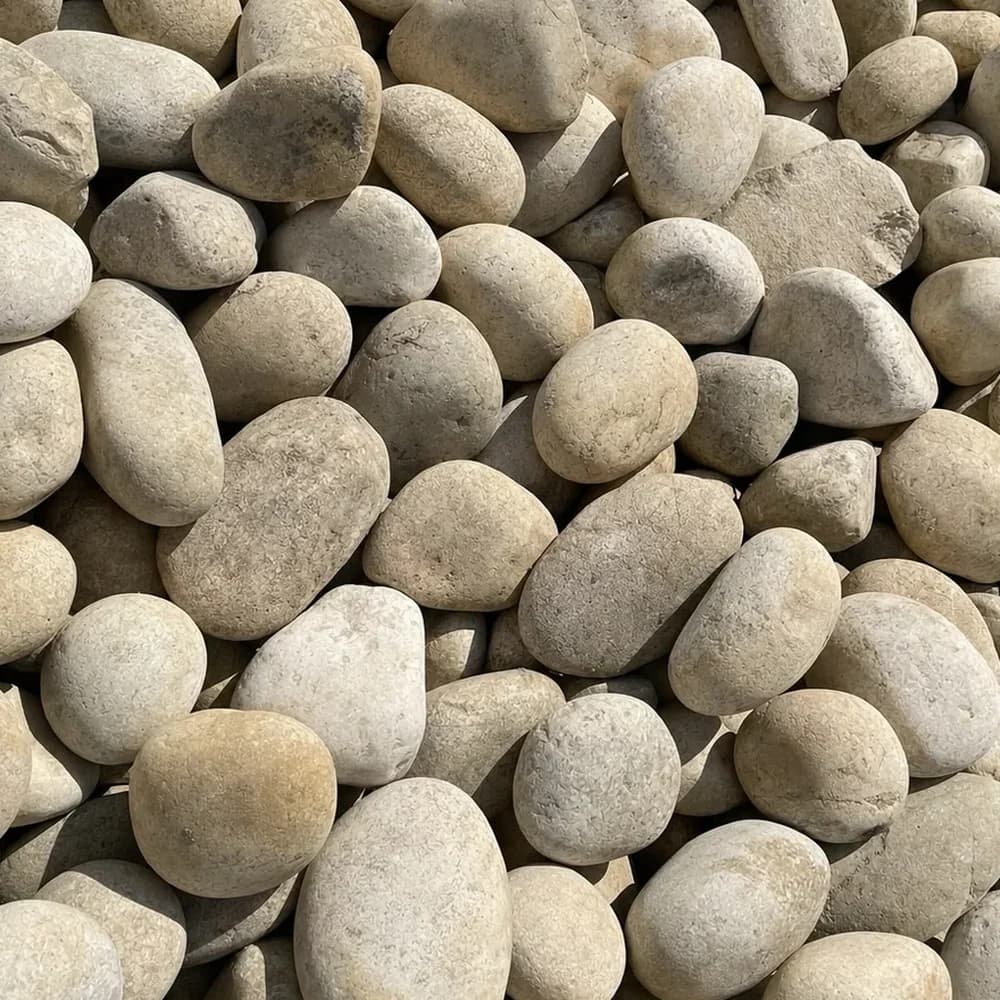
Texas River Rock settles into decorative beds and dry creek features with smooth, rounded stones that leave room for water to drain.
- Size: 1 inch to 3 inches
- Type: Smooth, naturally rounded stones
- Color: Tans, grays, browns and occasional reds
From $875 for 1 ton, delivery included (larger loads cost significantly less per ton)
Free delivery included
Free delivery anywhere in Texas
Pick a delivery date
Weekday delivery, earliest Oct 27
“Grabbed Texas River Rock from the team and I'm really happy with how it turned out. They kept me updated the whole time and communication was easy. Delivery was smooth, and I'd definitely order from them again.”
Stephanie S. · Verified Buyer
Get a Free Quote
Fill out the form and our sales team will get back to you within the hour.
Size and Grading
- Size
- 1 inch to 3 inches
- Type
- Smooth, naturally rounded stones
- Color
- Tans, grays, browns and occasional reds
Most visitors land here choosing between three rounded stones that look alike in a photo and behave nothing alike in a bed. Texas River Rock is the middle one: naturally rounded stone, one inch to three inches, in tans, grays, browns and the occasional red. The stone either side of it changes the job completely, and after a summer of heat and a run of hard downpours, that choice is what decides whether the bed still looks like the day it went down.
Against the pea gravel and the larger stone beside it
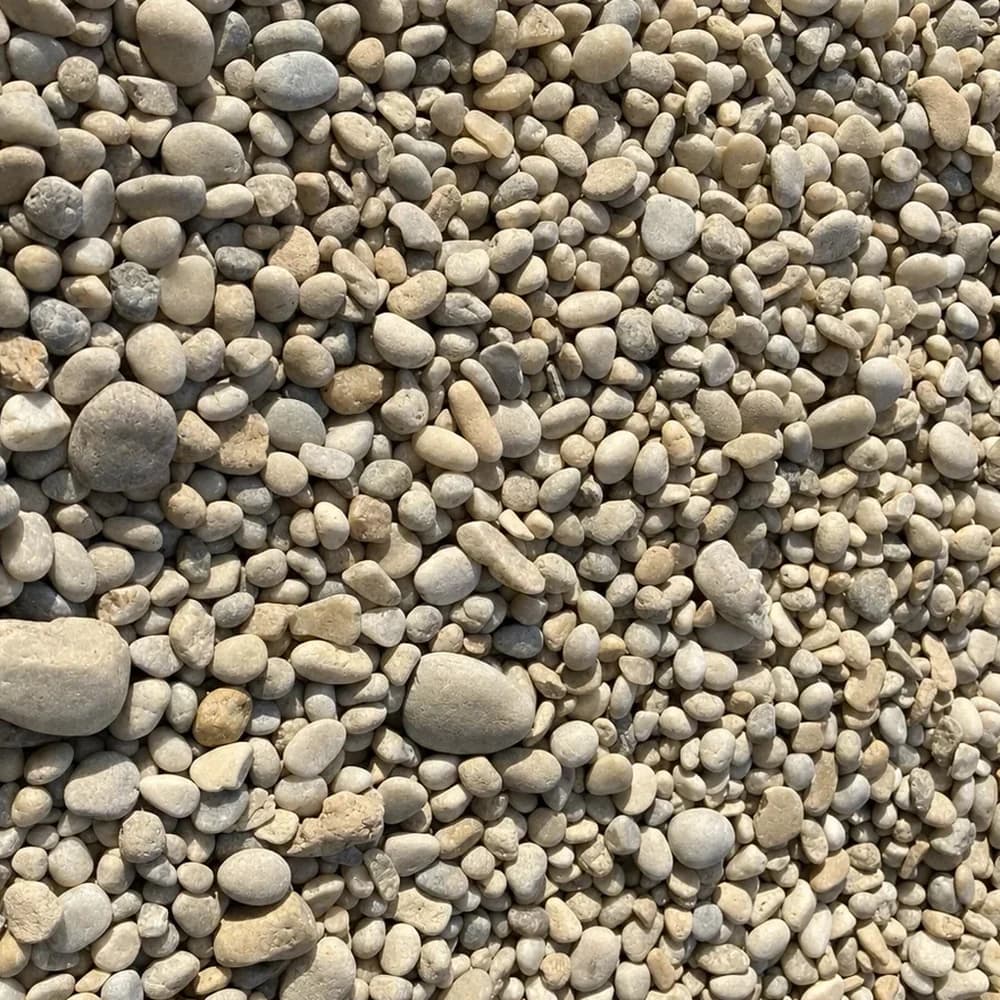
Size is the whole comparison. Pea gravel is far smaller, so it reads as a texture rather than as stone, tracks easily onto paths and drives, and moves when water crosses it. Large River Rock is heavier, sits still in a real flow, and suits a dry creek bed with genuine volume through it, though it leaves gaps a smaller stone would not.
The one to three inch range is where most Texas landscape work sits. Big enough that a storm will not rearrange the bed, small enough to spread by hand and to look right against brick, limestone and native planting. The pieces are rounded rather than crushed, which is worth knowing for two reasons: rounded stone is comfortable to work with and does not cut a hose or a bag, and rounded stone will never lock together the way an angular rock does.
The bed that keeps washing out
The job this stone gets bought for more than any other is the bed that mulch keeps leaving. Along a foundation, around a mailbox post, under a run of downspouts, mulch floats off in the first hard rain and bakes pale through August. Stone stays where it is put, does not break down and does not need replacing every year. Rinsing it with a hose is most of the upkeep.
It is a natural material with no dyes or preservatives to wash into the soil, and because water passes straight through the layer, it suits xeriscape beds and plantings where the aim is to cut watering rather than to hold a mulch blanket over the soil.
How rounded stone behaves on ground that swells and shrinks
Clay moves with moisture, and anything sitting on it moves too. A bed of loose stone handles that better than a rigid surface does, because it simply resettles. What it cannot do is fix drainage on its own. Water that has nowhere to go will still pond under the stone, and on clay it will sit there.
So treat the stone as the visible top of a drainage route rather than as the route itself. Give it a fall and an outlet. In a dry creek or a swale, this stone leaves enough space between pieces for water to move through while the surface keeps runoff off bare soil, which is what stops a bed rilling out along the same line every storm.
Two downspout splash areas and a connecting run
This is the job it does most reliably. Downspouts concentrate roof water into one spot, and a small stone pad breaks that fall and spreads it.
Two pads 4 by 6 feet, plus a 20-foot run two feet wide connecting one of them to the border: 24 + 24 + 40 = 88 square feet. At three inches: 88 x 3 ÷ 12 = 22 cubic feet, ÷ 27 = 0.8 of a cubic yard. This site publishes roughly 2,700 lb per cubic yard for one to three inch river rock, about 1.35 tons per yard, so 0.8 x 1.35 is approximately 1.1 tons. This is a worked example rather than a real installation, so check your own layout with the rock calculator. Set the pads slightly below the surrounding grade so water stays in them, and extend the run far enough from the slab that the water is genuinely away from the foundation.
A shed pad and a wall backfill: one it can do, one it cannot
Two jobs come up constantly and only one of them is right.
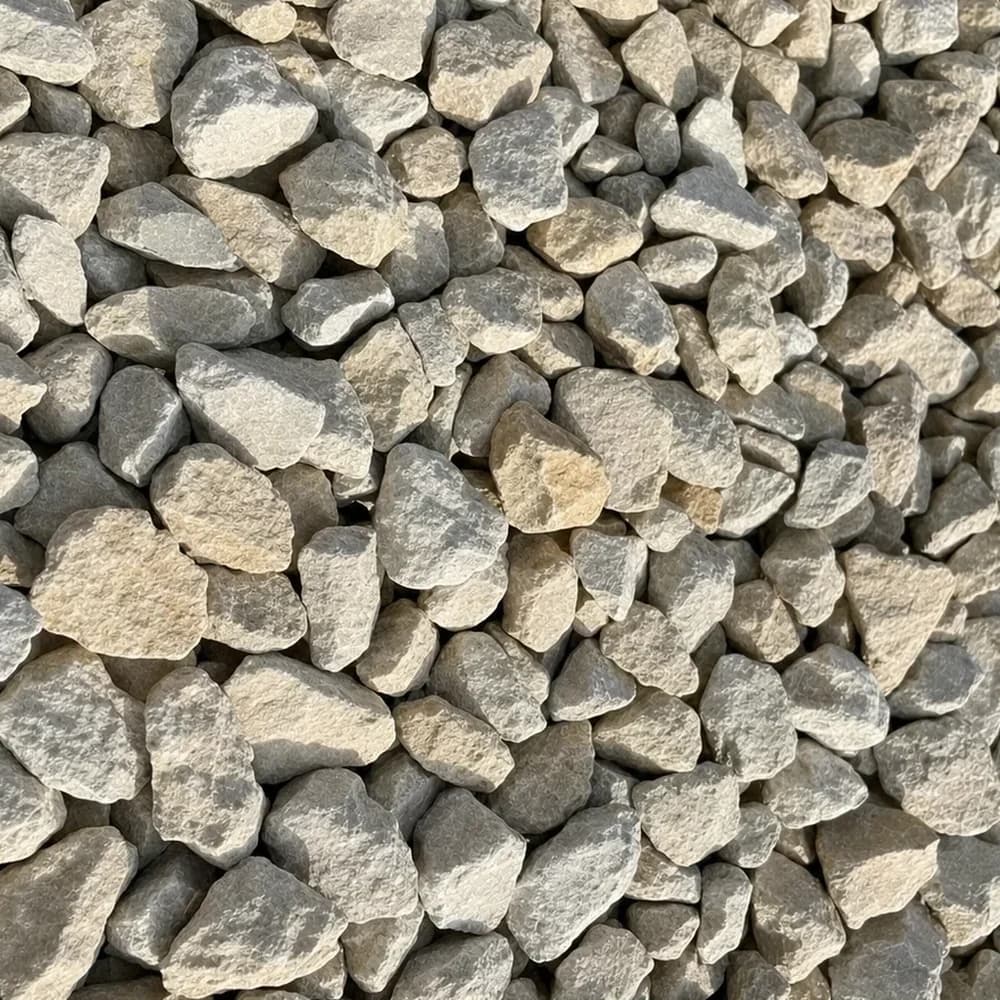
Behind a retaining wall, a drainage chimney of clean stone works, and rounded stone drains well. For a 24-foot wall with a one-foot-wide chimney three feet high: 24 x 1 x 3 = 72 cubic feet, ÷ 27 = 2.7 cubic yards. In practice most wall backfill is specified as angular, because #57 Limestone keys together and holds its shape as the wall settles. Save the rounded stone for the parts of a wall job that anyone will see.
Under a shed or garage pad it is the wrong material. A 12 by 16 foot pad at four inches works out at 192 square feet, x 4 ÷ 12 = 64 cubic feet, ÷ 27 = 2.4 cubic yards of rounded stone that will never compact and will roll under load. A pad wants a graded material with fines in it, such as Flex Base, compacted in lifts.
Fabric, edging and the depth that stops stone traveling
Three inches is a sensible working depth for one to three inch stone. Two inches, which is the usual landscape default, is barely a single stone deep here and lets the fabric or soil show through as soon as anything disturbs the surface. Much more than three and you are paying for stone nobody can see.
Lay fabric underneath on soil that stays damp, and give every bed a hard edge: steel, stone or a paver course. Stone with nothing to stop it will migrate onto the lawn and the drive, and once it is in the mower it stays a problem. Where a bed sits on a slope, drop the depth at the top of the run and let the edging take the load at the bottom.
Measuring a bed that is not a rectangle
Beds curve, so break the shape into pieces. Split a curved border into rectangles, measure each one, add them together, then add a little for the fact that you always underestimate the ends. For a rounded corner, take the widest and narrowest widths and work with the average.
Once the number is settled, including the five percent the river rock calculator adds by default, pick a quantity and a date, and think about where the pile can sit. A tarp on the drive is easier to clean up than a heap on the lawn, and the truck needs clear access to whatever spot you choose. Texas Rock Supply sets delivery at checkout from the ZIP you enter. If the bed is awkward or you want a second opinion on depth, send the measurements through the contact page before you order.
Quickly Calculate How Much You Need
Material: Texas River Rock
How to Measure
Measure the length and width of your project area in feet
Decide on depth in inches (2" for landscaping, 4" for driveways)
Enter the values above and we'll calculate the tonnage you need
Need help figuring out the right amount? We can help!
Call or text us at (512) 412-3378 and we'll help you calculate the right quantity for your project.
Not sure how much you need? The River Rock Calculator has depth guides, coverage charts and worked examples for this material.
Frequently Asked Questions About Texas River Rock
Customer Reviews
Grabbed Texas River Rock from the team and I'm really happy with how it turned out. They kept me updated the whole time and communication was easy. Delivery was smooth, and I'd definitely order from them again.
Stephanie S. · Houston, TX · Verified Buyer
Decided on Texas River Rock from Texas Rock Supply for a backyard project, and I'm really happy with how it turned out. The pricing was fair and felt like a good value for the amount we got. Delivery was easy, and I'd definitely order from them again.
Brian V. · San Antonio, TX · Verified Buyer
Got Texas River Rock from these guys and it was just what I ordered. They kept me updated the whole time and communication was easy. Really happy with how it all turned out.
Wendy E. · San Antonio, TX · Verified Buyer
Decided on Texas River Rock from Texas Rock Supply and it looks awesome around my beds. Delivery was easy, and I'd definitely order again and recommend them.
Ashley G. · Austin, TX · Verified Buyer
A Solid Choice
The process with Texas Rock Supply was clear and easy to follow. The river rock made a noticeable improvement to the finished project. I would feel confident ordering from them again.
Laura H. · El Paso, TX · Verified Buyer
Texas River Rock has 5 verified customer reviews with an average rating of 5 out of 5.