What Is #57 Stone? Size, Uses and #57 vs #67 Stone
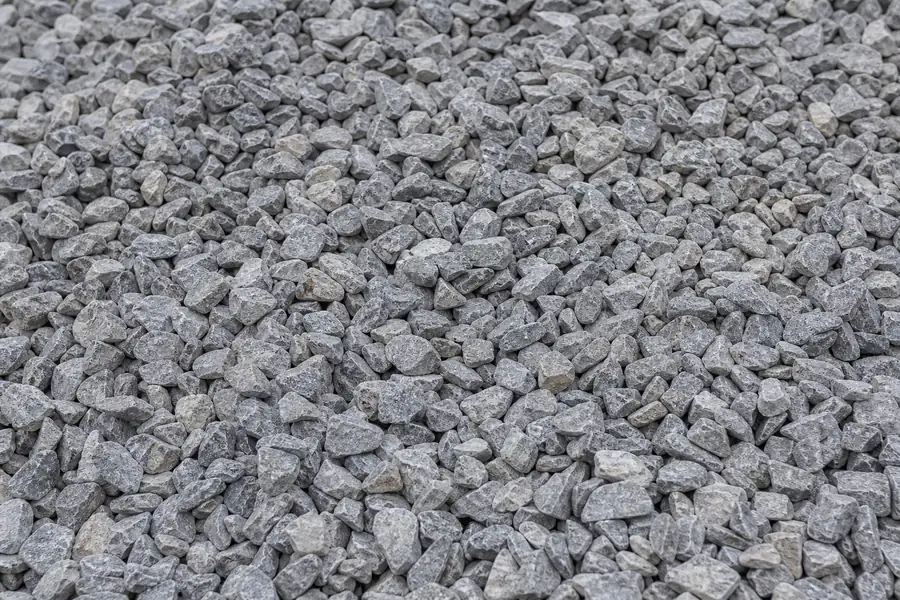
Quick answer: #57 stone is a crushed stone size, usually limestone in Texas, with individual pieces ranging from about 3/4 inch down to roughly 1/4 inch. The name comes from the standard aggregate gradation chart that also gives us #67 stone and #8 crushed stone, and it describes the size spread, not the rock type.
Because every piece in a load of #57 stone is close to the same size, the stone stacks with open gaps between pieces instead of packing flat. That's the whole story behind why it drains so well and why it never compacts into a hard surface, no matter how much a plate compactor leans on it.
Why #57 Stone Drains But Won't Compact
#57 stone drains fast and refuses to compact because it's an open graded aggregate, meaning the stone is screened to a narrow size range with the fines sifted out. Open graded stone stacks like marbles in a jar: there's always air space between pieces, and that air space is exactly what lets water pass straight through instead of pooling.
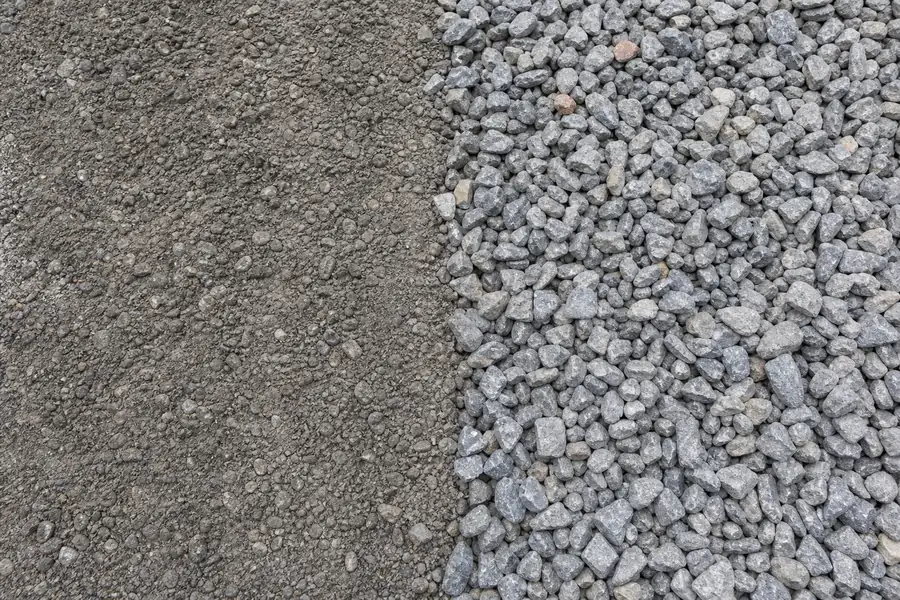
Crushed base materials like road base work the opposite way. They're dense graded, which means they include everything from fist sized rock down to powder, and that powder fills the gaps between larger pieces so a compactor can lock the whole mix into a hard, stable mat. #57 stone has no fines to fill those gaps, so no amount of tamping will make it compact. It just shifts and resettles.
That tradeoff is the reason #57 stone is the wrong pick under a driveway but the right pick in a drain line. If you need a surface that holds its shape under tires or foot traffic, you want something that compacts. If you need water gone, you want #57 stone.
#57 Stone vs #67 Stone vs Crusher Run
#57 stone, #67 stone and crusher run cover three different jobs, and the difference comes down to size range and whether fines are present.
| Material | Size range | Compacts? | Drains? | Common use |
|---|---|---|---|---|
| #57 Stone | 1 in down to 1/4 in | No, stays loose | Excellent | French drains, under slabs, drain fields |
| #67 Stone | 3/4 in down to 3/8 in | No, loose but tighter | Good | Pipe bedding, light drainage fill |
| Crusher Run | Dust up to 3/4 in | Yes, compacts hard | Poor, holds water | Driveway and pad base |
Crusher run is crushed limestone with the fines left in, which is why it builds a solid, load bearing base instead of a loose drainage layer. #67 stone sits between the two: smaller and more uniform than #57 stone, so it packs a bit tighter into a trench, but it's still open graded and won't compact into a walking surface. If your job calls for something finer still, such as pipe bedding or exposed aggregate work, #8 crushed stone runs about 3/8 inch to 1/2 inch and keeps that same no compaction, fast drainage behavior at a smaller scale.
Best Uses for #57 Stone in Texas
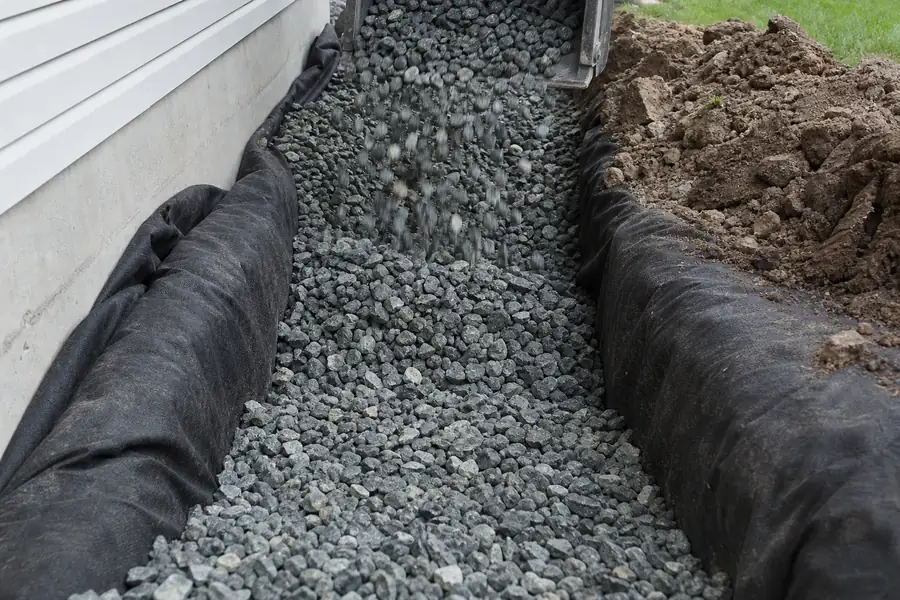
#57 stone works best anywhere the job is moving water, not carrying weight. It's the standard fill for French drains cut through black gumbo clay, where the clay swells and traps water against a foundation unless something underground gives it a fast path out. The same open voids make it a solid choice for septic drain field fill, for a leveling layer under a concrete slab, and for decorative drainage pockets below downspouts and sump discharge lines.
Skip #57 stone anywhere tires, foot traffic or furniture will sit directly on it. A driveway, patio base or walkway bed needs a material that locks together, which points you back to crusher run or flex base instead.
How Much #57 Stone You Need
One ton of #57 stone covers roughly 80 square feet at 3 inches deep, a bit less than a finer gravel because the larger, uniform pieces leave more void space per cubic foot. A typical French drain trench, 12 inches wide and 18 inches deep, uses about half a ton for every 10 linear feet once you account for the drain pipe taking up some of that space. Run your own numbers for trench length, drain field size or bedding depth through the crushed stone calculator before you order.
FAQs
Can you use #57 stone for a driveway?
Not as the main driving surface. #57 stone stays loose under tires and ruts quickly because it has no fines to lock the pieces together, so driveways need a compacting base material like crusher run or flex base instead, with #57 stone reserved for drainage layers beneath it if needed.
Does #57 stone need a base underneath it?
Most drainage applications place #57 stone directly on filter fabric over native soil rather than on a compacted base, since the goal is water movement, not load support. For a French drain or drain field, the fabric keeps soil from migrating up into the stone and clogging the voids that make it drain.
What is the difference between #57 and #67 stone?
#57 stone runs about 1 inch down to 1/4 inch, while #67 stone is a tighter 3/4 inch to 3/8 inch range. Both are open graded and will not compact, but #67 stone's smaller, more uniform pieces make it a common choice for pipe bedding where #57 stone is used for broader drainage fill.
Is #57 stone the same as pea gravel?
No. Pea gravel is naturally rounded river stone used mostly for walkways and decorative beds, while #57 stone is angular, crushed limestone sized for drainage performance. The angular edges in #57 stone interlock slightly, which rounded pea gravel does not do.
Can #57 stone compact at all?
Not into a stable, load bearing surface. It will settle and shift under repeated weight, but without fine material filling the gaps between pieces, a compactor cannot bind it into a dense mat the way it can with crusher run or flex base.