Road Base Calculator: Flex Base for Texas Lanes and Pads
Enter your project dimensions
The lane that runs back to a barn on the Blackland Prairie sits on clay that swells through a wet week and pulls apart in a dry one, and the ruts that show up every spring are that movement working through a base that was never thick enough. Base is what holds a loaded truck above ground that will not hold still. This page answers the questions that come up in the order people ask them, starting with what to measure and ending with what to order.
How do I measure a lane that bends and changes width?
Take the length along the centerline and use an average width, because a lane that runs 10 feet across the straights and opens to 14 at the turnaround is one job, not two. Pace it if you must, then check it with a wheel or a tape before you order, since a hundred feet of error on a 12-foot lane at 6 inches is another thirty-three tons.
The shape controls do the rest. Rectangle mode takes a length and a width in feet. Circle mode takes a diameter, which is how you handle a turnaround or a round tank pad. Multiple areas mode takes up to five pieces, and that is where a lane plus its apron at the county road plus a wide spot for passing all go in together. Depth accepts 0.25 to 24 inches, which covers any base section you are likely to build. Pick the material, then press calculate for cubic yards, tons and cubic feet, with an Email my quote button if you want the numbers in writing.
How deep does the base go under a lane, a pad or a container corner?
Depth is the decision the calculator cannot make for you, and it is the one that moves the tonnage most.
| What runs on it | Compacted depth |
|---|---|
| Light residential traffic on firm ground | 4 inches |
| Daily vehicles and delivery trucks | 6 inches |
| Soft or wet subgrade, or equipment standing on it | 8 to 12 inches |
Two things go under that depth before any stone does. Strip the organics, because topsoil left under base pumps mud up into the aggregate no matter how deep you built it. Then put woven geotextile down where the subgrade is soft, wet or already rutting, which separates clay from stone and keeps the two from mixing over a decade of loads. On ground that moves seasonally, adding depth beats adding width every time, because a thin section is what fails first.
Why does a hundred feet of lane turn into thirty tons?
Because base is heavy and a lane is longer than it looks. This site publishes Flex Base and road base at about 3,000 lb per cubic yard, which is 1.50 tons to the yard, the heaviest of the common driveway materials it sells.
The chain of arithmetic is the same one the rest of the calculators use. Length times width gives square feet. Multiply by depth in inches and divide by 12 for cubic feet. Divide by 27 for cubic yards. Multiply by 1.50 for tons. One ton covers roughly 36 square feet at 6 inches compacted, so a hundred-foot run of 10-foot lane at that depth is in the region of 28 tons before any allowance.
Here are two hypothetical jobs with the working shown.
A ranch lane 420 feet long and 12 feet wide, built to 6 inches: 420 x 12 = 5,040 square feet. 5,040 x 6 / 12 = 2,520 cubic feet. 2,520 / 27 = 93.33 cubic yards. 93.33 x 1.50 = 140 tons. With the 10 percent box ticked, 102.66 cubic yards and 154 tons.
A container pad 10 by 40 feet at 8 inches, because the weight lands on four corners rather than being spread: 400 square feet, 400 x 8 / 12 = 266.67 cubic feet, 9.88 cubic yards, 14.81 tons. With 10 percent added, 10.87 cubic yards and 16.29 tons.
What do I add for compaction, and where does the crown come from?
The only allowance on this page is the checkbox marked add 10% extra for compaction and spillage, and it is ticked when the page loads. Leave it on for anything you are going to roll, because rolled base tightens and the surface drops. Untick it if you have already entered a generous depth or you are topping up a lane that is mostly sound.
The allowance does not build the crown, though, and the crown is what keeps the base alive on this ground. Slope the finished surface 2 to 3 percent from the centerline out to the edges so a downpour runs off the sides instead of standing in the section. Build up to that in lifts of 4 inches or less, rolling each one before the next goes on, because a single 8-inch dump compacted from the top is firm on top and loose underneath. If you want the crown counted in the order, enter the crowned part as its own area rather than adding a percentage.
One practical note on the bigger numbers. Twenty tons and up is not a wheelbarrow job. A box blade or a skid steer spreads it in an afternoon, so book the machine for the same window as the delivery.
Which material belongs under a lane, and which belongs on top of it?
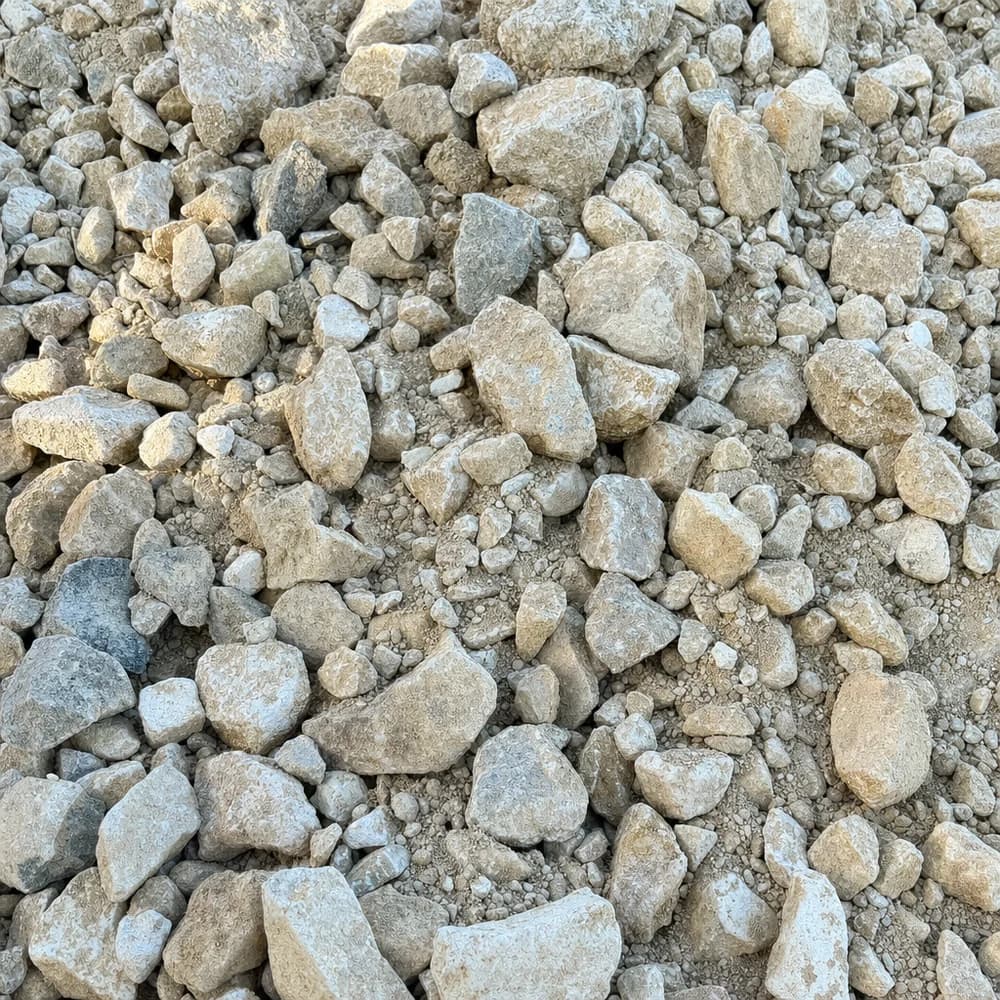
Flex Base is the default here. It is the graded crushed stone and fines blend that Texas specifications describe as flexible base under TxDOT Item 247, usually by grade, and it is how base is named on plans, at counters and in conversation across the state. Grades are how the material is specified locally, not something the storefront certifies.
Crushed limestone base, listed as Crusher Run, is the finer relative. Both weigh the same 3,000 lb to the yard and both compact, but the larger top size in Flex Base carries load better on a lane or a yard, while the finer mix grades smooth and is easier to bring to a tight level under pavers. If that is your job, the crusher run calculator is set up for it.
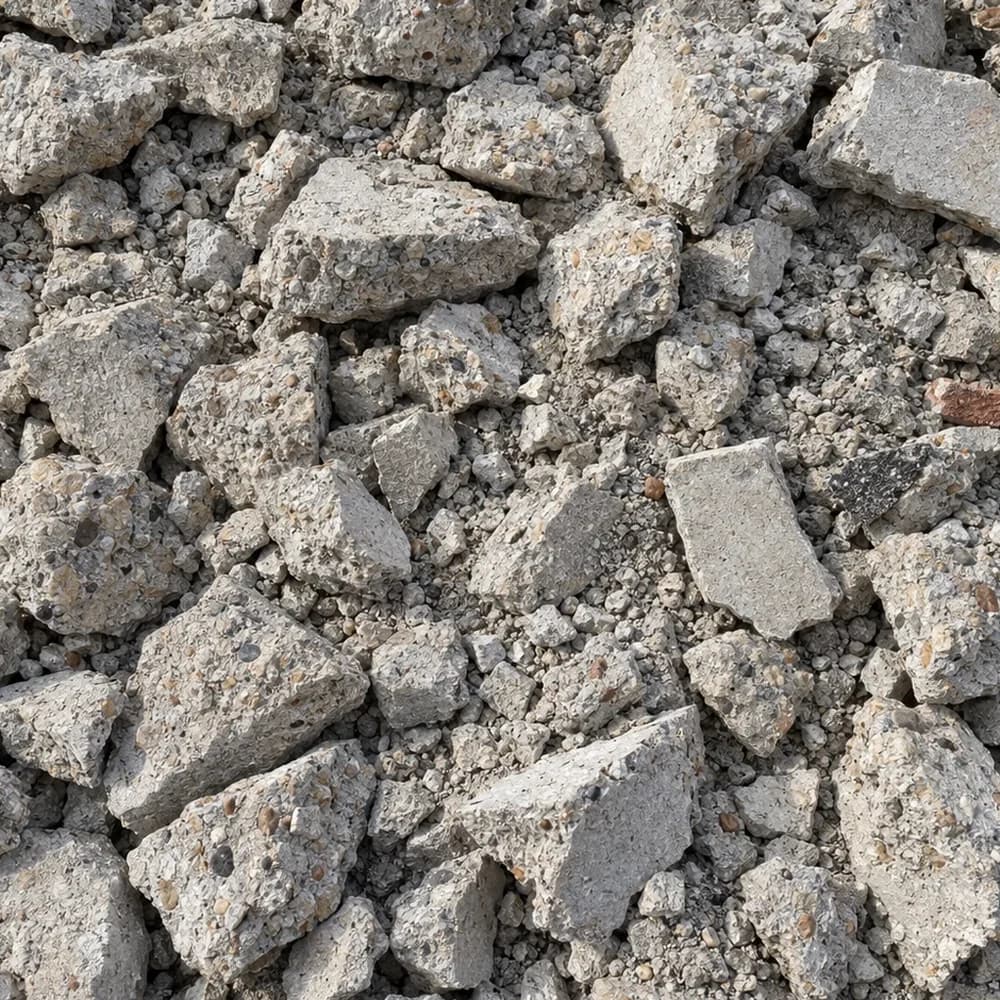
On top, a driving surface of #57 Limestone or driveway gravel at 2 to 3 inches finishes the lane, cuts dust and gives the base something to wear instead of itself. Run the tool twice for a two-layer job: once at the base depth with Flex Base, once at the surface depth with the top material, and order them as two lines. Recycled crushed concrete runs through the same arithmetic at the same 1.50 tons per yard where a specification allows it, so check what your county asks for before you substitute.
Delivery is arranged at checkout by ZIP code, so pick the drop spots first, then set your quantity and date on the product page. Anything you are unsure about on depth can go through the contact page.
Common questions
The lane is 400 feet of ruts and soft patches. Will a number off this page hold up?
The arithmetic will. What varies is the subgrade under it, and on a rutted lane the ruts themselves swallow material before you have a level surface to build on. Blade it out first, then measure. If you cannot, treat the first delivery as the leveling course and re-measure before ordering the section on top.
I want 6 inches on the finished lane. Do I type 6, or more?
Type the compacted depth you want, which is 6. The 10 percent box covers the tightening and the spillage on top of that. Do not enter a loose depth as well as leaving the box ticked, or you are paying for the same allowance twice.
Why am I looking at a yardage and a tonnage for the same lane?
The lane is a volume, so cubic yards describe what you measured. Base is sold and hauled by weight, so tons are what you order against. At 1.50 tons per cubic yard the two figures are the same pile counted two ways.
Where do 140 tons actually go on a place like this?
Not in one pile at the gate. Split a long lane into two or three drops spread along the route so the machine is pushing material short distances instead of hauling it the length of the job. Each spot needs firm ground the truck can get onto and back off, which after heavy rain may mean waiting a couple of dry days.
Which listing do I order from once the tonnage is set?
Flex Base for lanes, drives, pads and laydown yards. If your job is close grading or a bed under pavers, order Crusher Run instead. A finishing course is a separate order of #57 Limestone or driveway gravel.
Related calculators
Thirty tons. Zero delivery fees.
Road base priced per ton, hauled free, at lane quantities where hauling usually costs the most.