Drain Rock for Texas Yards That Hold Water
Across Texas clay ground, Drain Rock stays clean-looking in exposed drainage and keeps water moving away from wall backfill.
- Size: 3/4 inch to 1-1/2 inch
- Grading: Washed to remove fines and dust
- Type: Rounded or angular varieties
From $424 for 1 ton, delivery included (larger loads cost significantly less per ton)
Free delivery included
Free delivery anywhere in Texas
Pick a delivery date
Weekday delivery, earliest Oct 27
“Ordered drain rock from the team and it was super simple. Free delivery was a big plus, and everything showed up right when I needed it.”
Mike K. · Verified Buyer
Get a Free Quote
Fill out the form and our sales team will get back to you within the hour.
Size and Grading
- Size
- 3/4 inch to 1-1/2 inch
- Grading
- Washed to remove fines and dust
- Type
- Rounded or angular varieties
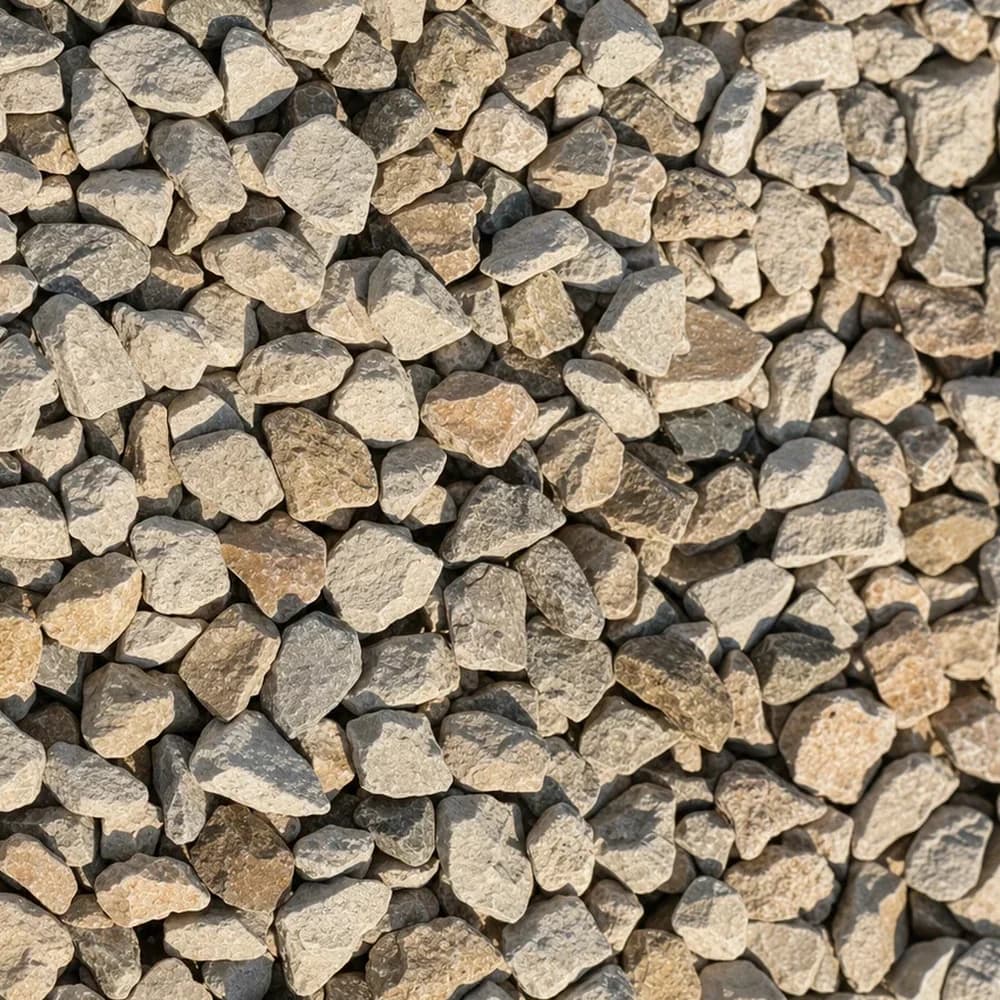
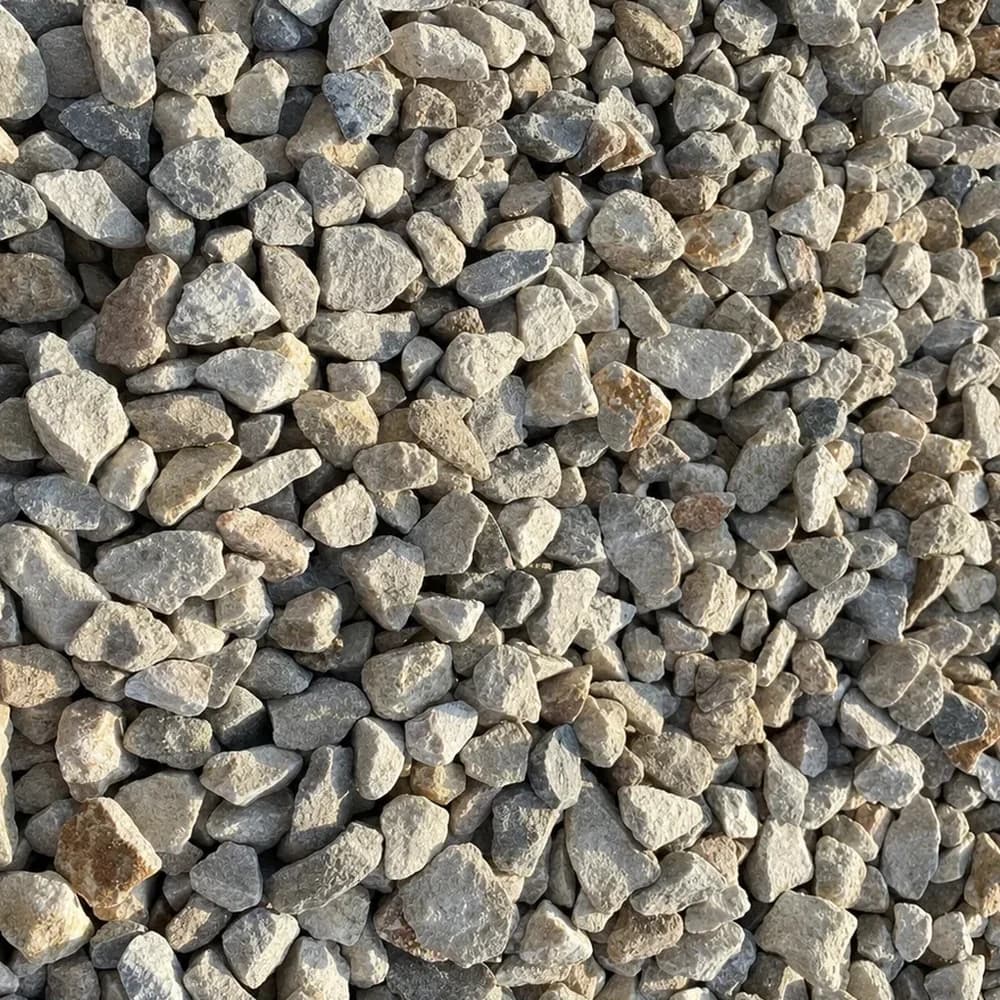
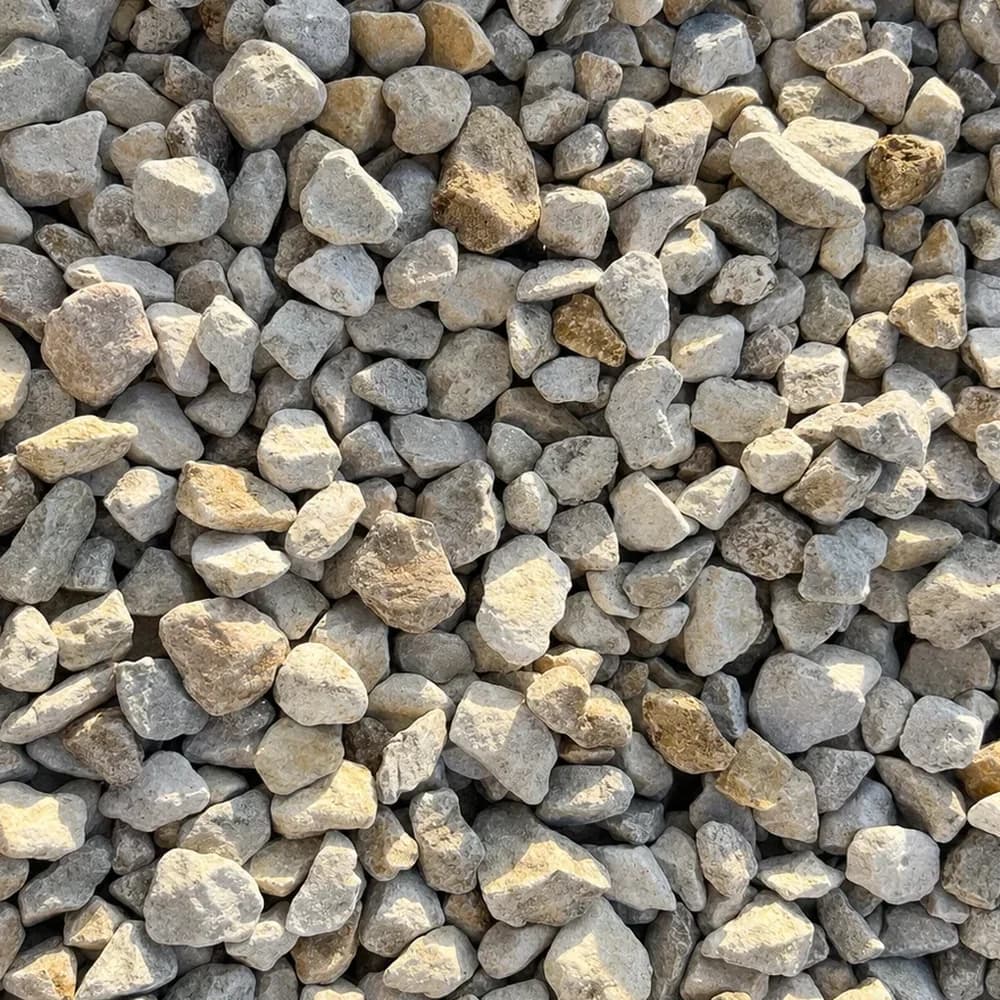
A drain rock load looks different to almost everything else on the order form before you touch it. The pieces run three quarters of an inch up to an inch and a half, they have been washed, and there is no gray film on them and no dust cloud when the bed tips. Pick some up two days after rain and it is still just stone. That washing is not cosmetic. It is the reason water travels through a trench packed with this material instead of slowing to a crawl in the first wet season.
Three days after a storm and the back yard is still standing water
That is the problem this material is bought to fix. Clay across North Texas and the Blackland Prairie takes rain faster than it lets it go, so a downpour that lasts an hour leaves water sitting for days over a flat lawn, against a slab edge, or in the low corner where the fence turns. Gulf Coast rainfall makes the same point at greater volume.
Stone does not absorb any of that. What it does is give the water an easier route than the clay, at a level below the surface, pointed somewhere you chose. A trench filled with washed stone and a perforated pipe collects water that would otherwise pond and carries it to daylight, a dry well or a street outlet. The stone is the part that keeps the route open for years, which is why the grading and the washing matter more than the rock type.
How 3/4 to 1-1/2 inch washed stone behaves in gumbo clay
Two things work against a buried drain here. The first is soil movement. Gumbo swells through a wet spell and shrinks back in the heat, and a drain run through it has to tolerate the ground shifting around it. Loose stone does that easily, since the pieces simply reseat.
The second is silt, and it is the one that kills drains. Wet clay migrates into open stone unless something stops it, and once the gaps carry fines the run slows down. Nothing on the surface tells you it has happened until the water starts standing again. That is the entire argument for wrapping the trench in a permeable geotextile before the stone goes in.
The pack lists the stone in both rounded and angular forms. Angular pieces interlock and hold their open structure better where soil or backfill presses on them, which suits a wall or a loaded trench. Rounded pieces read as a natural landscape material where the drainage feature stays visible.
Trench, fabric, pipe, drain rock: the order along a single-car gravel drive
A single-car gravel drive that sheds its water sideways into the yard is a common place for a first drain. The sequence does not change much anywhere else.
Cut the trench to a steady fall along the low side of the drive, aiming for somewhere between one and two feet deep depending on what you are draining. Line it with geotextile, lapping the fabric well up both walls with plenty spare to fold over the top. Put two to three inches of drain rock in the bottom, then lay the perforated pipe with the holes turned down, so water enters from the level it collects at rather than from above.
Backfill around and over the pipe with more stone until you have at least four to six inches of cover, fold the fabric over the whole lot, and cap it. A capped run can take gravel, sod or a strip of decorative stone. Keep the fall constant and check it with a level rather than by eye, because clay spoil dumped alongside will fool you every time.
Where a flagstone walkway crosses a wet strip of yard
Not every drainage job needs a pipe. Where a flagstone walkway crosses a strip that stays soggy, a shallow bed of drain rock under the setting course gives the water somewhere to go instead of pumping mud up between the stones every time someone walks on it.
Excavate a little deeper than you would on dry ground, lay fabric, put four inches of drain rock in, then the bedding layer and the flagstone. The same approach works behind a low garden wall and along the uphill side of a run of raised vegetable beds, where the aim is to stop water pooling against timber that will rot. Tie any of these into a route out. A bed of stone with no outlet is a bathtub with rocks in it.
Silt, roots and the upkeep a buried drain actually needs
The maintenance is light but it is not nothing. Put a clean-out or an accessible end on any run longer than about thirty feet, so you can look down it rather than dig it. Keep the outlet clear, because a blocked outfall backs the whole line up. Watch what gets planted over a run: willows and any thirsty shrub will find a perforated pipe and fill it.
Where drain rock is exposed at the surface in a swale or a splash area, a rinse with a hose lifts the dust that blows into it through a dry summer. That is most of the upkeep for the visible parts.
A 60-foot trench and an odd-shaped bed, measured for tons
Take a hypothetical run down the side of a property, 60 feet long, a trench 18 inches wide, with 12 inches of stone in it around the pipe. That is 60 x 1.5 = 90 square feet of trench floor, then 90 x 12 ÷ 12 = 90 cubic feet, and 90 ÷ 27 = 3.3 cubic yards. This site publishes around 2,800 lb per cubic yard for washed stone in this size family, roughly 1.40 tons per yard, so the order sits near 4.7 tons.
For a bed that is not a rectangle, break it into pieces. A border that runs 12 feet by 4 feet, then turns and runs another 7 feet by 4 feet, is 48 + 28 = 76 square feet. At four inches: 76 x 4 ÷ 12 = 25.3 cubic feet, then ÷ 27 = 0.9 of a cubic yard, about 1.3 tons.
Both are examples rather than real installations. Put your own numbers through the stone calculator, which handles several areas at once, then pick a quantity and a delivery date here. Delivery is set at checkout from your ZIP, and the truck needs clear access to whatever drop spot you choose, ideally close to the trench so the stone gets moved once.
Quickly Calculate How Much You Need
Material: Drain Rock
How to Measure
Measure the length and width of your project area in feet
Decide on depth in inches (2" for landscaping, 4" for driveways)
Enter the values above and we'll calculate the tonnage you need
Need help figuring out the right amount? We can help!
Call or text us at (512) 412-3378 and we'll help you calculate the right quantity for your project.
Not sure how much you need? The River Rock Calculator has depth guides, coverage charts and worked examples for this material.
Frequently Asked Questions About Drain Rock
Customer Reviews
Grabbed drain rock from them and the delivery showed up as planned, couldn't be happier.
Ryan L. · El Paso, TX · Verified Buyer
Got drain rock from them and the price felt fair for what I got. Delivery was easy, and I'd definitely order from them again.
Carlos F. · Fort Worth, TX · Verified Buyer
Needed drain rock and Texas Rock Supply made ordering no fuss, then delivered it right when they said they would.
Rob E. · San Antonio, TX · Verified Buyer
Ordered drain rock from the team and it was super simple. Free delivery was a big plus, and everything showed up right when I needed it.
Mike K. · San Antonio, TX · Verified Buyer
Decided on drain rock from Texas Rock Supply and I'm really happy with what showed up. Pricing was fair, the free delivery was a nice bonus, and I'd definitely order from them again.
Diane H. · El Paso, TX · Verified Buyer
Drain Rock has 5 verified customer reviews with an average rating of 5 out of 5.