River Rock Calculator for Texas Beds, Borders and Dry Creeks
Enter your project dimensions
Rain here rarely arrives politely. A bed that looked settled through a dry July takes three inches in ninety minutes, and by the time the sun is back out the mulch has fanned across the drive on its way to the street. That is what brings most people to this tool: a dry creek line to carry the next downpour, a splash strip under an eave that has no gutter, or a border that quit holding anything two summers ago. Depth is the number the ground argues with, so settle depth first and let area follow.
Clay that opens in August decides the depth before the stone does
Bare ground takes rock in. Stones work down a little every season, and on shrink-swell clay the cracks that open in a dry spell give them somewhere to go, which is why a thin spread looks fine in spring and shows fabric by the following fall. Two things hold a bed at the depth you paid for: non-woven fabric pinned down before the rock goes on, and a layer roughly twice the diameter of the stone you picked.
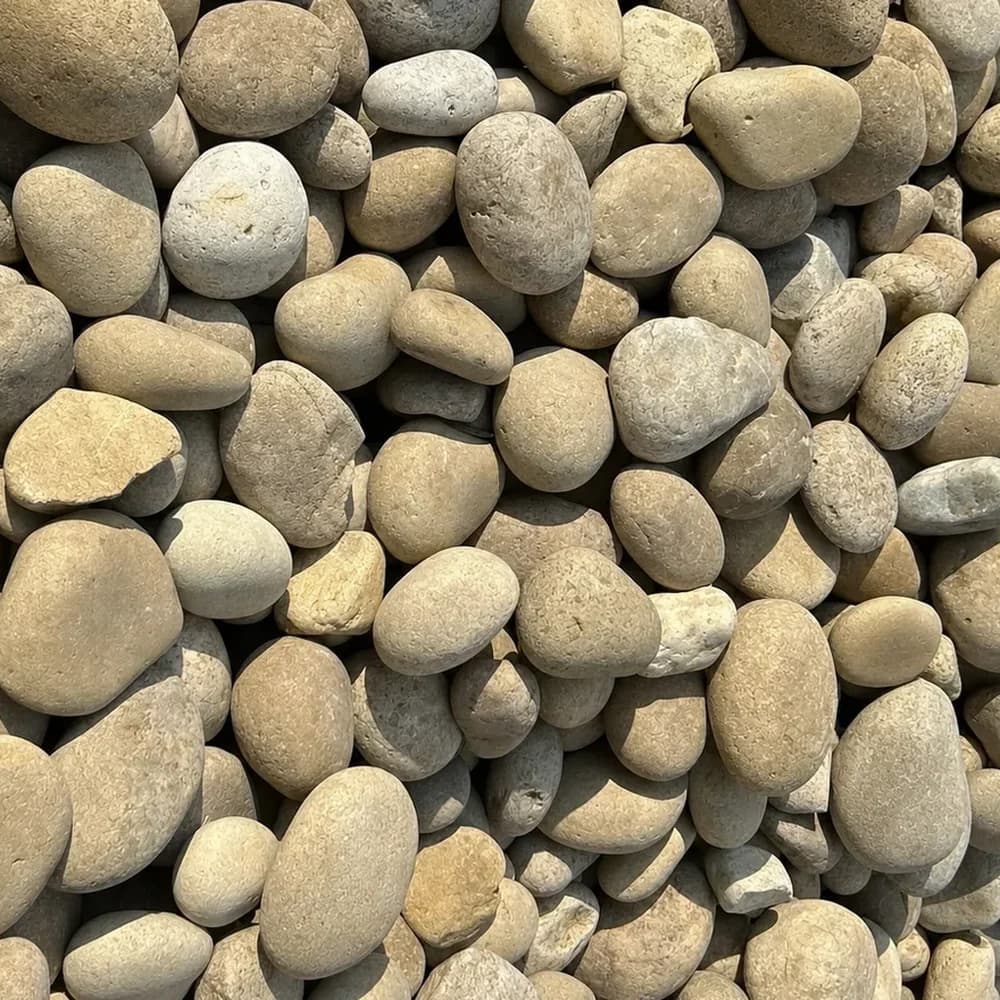
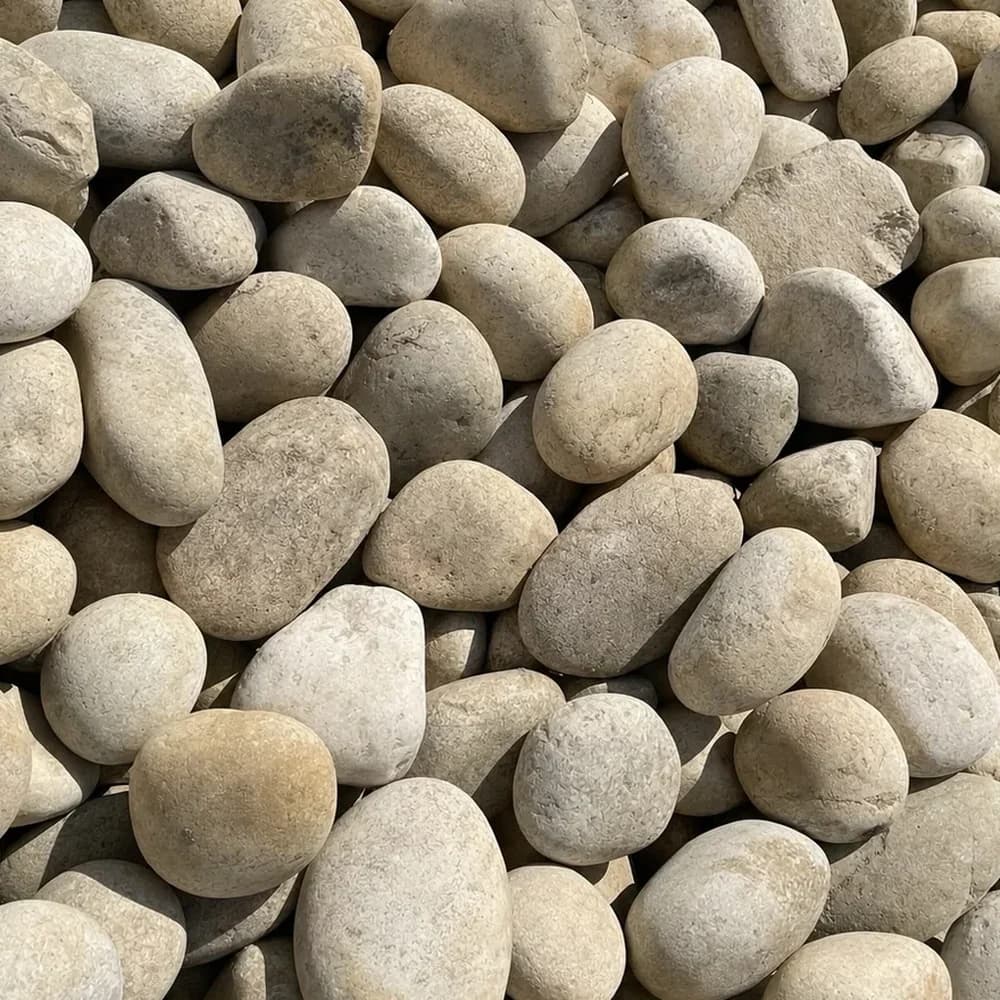
That second rule sets your depth field. Three-quarter to one inch material wants about 2 inches. One to three inch rock wants 3 to 4. Large river rock in the two to four inch range wants 4 to 5, and single-layer accent boulders are placed rather than spread. If fabric still peeks through once everything is raked out, the fix is more depth over the same footprint, not a wider bed.
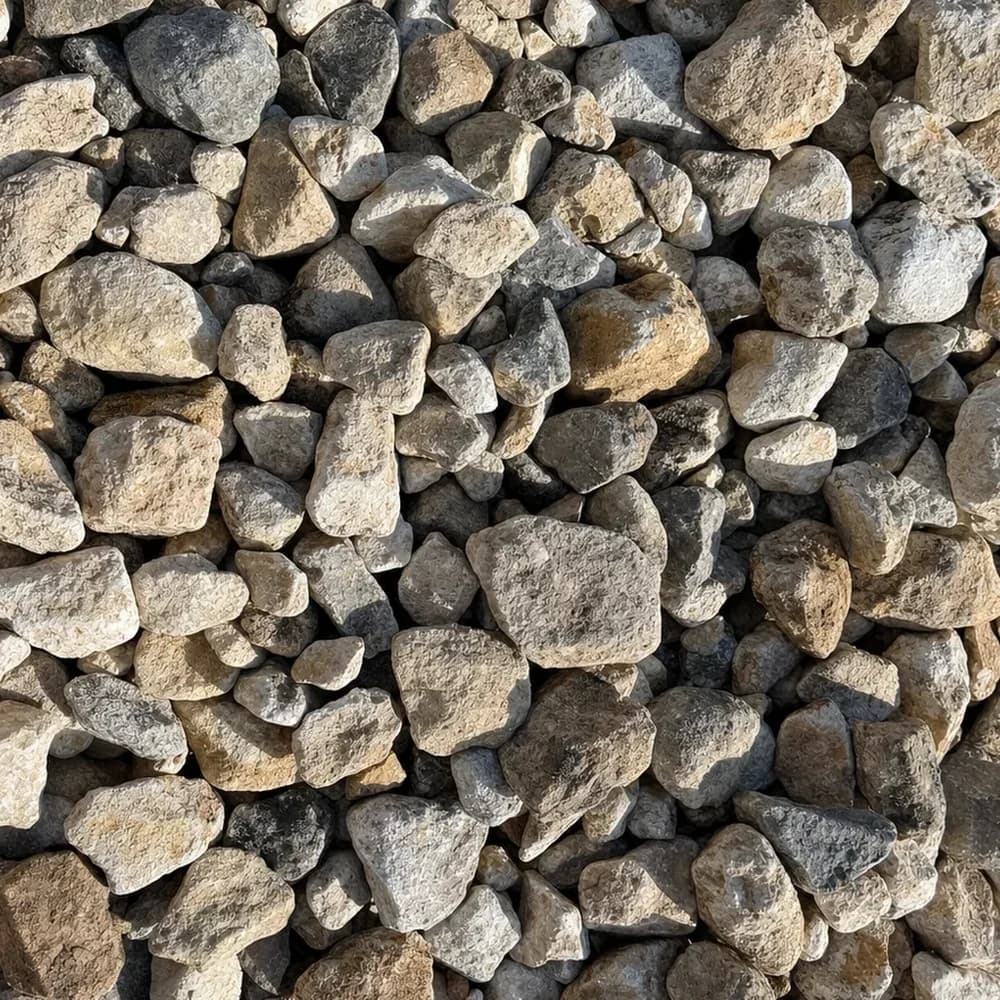
One exception matters on a lot that actually drains. Where stone is doing drainage work rather than decoration, the fabric wraps around the stone instead of lying under it, so silt cannot pack the voids from above. That is drain rock territory, and it is worth deciding which of the two jobs your line is doing before you enter a depth.
Entering a creek line that bends and a bed that is not square
Rectangle mode takes a length and a width in feet. Circle mode takes a diameter in feet, which suits a ring around a live oak or a round landing at the end of a path. Multiple areas mode holds up to five sections at once and adds them into one total, and that is the mode a dry creek belongs in: break the run at every bend, measure each straight piece on its own, and let the tool sum them. A creek that widens into a pool halfway down should have that pool entered as its own section at its own depth.
Depth takes anything from 0.25 to 24 inches. Choose the material, then decide about the box marked add 5% extra for compaction and spillage. On loose decorative stone there is nothing to compact, so what that 5 percent really covers is the handful that rolls off a shovel and the low spots you find while raking. Press calculate and the estimate comes back as cubic yards, tons and cubic feet, with an Email my quote button if you would rather have the figures in writing before you order.
A ton lands smaller than people picture
The arithmetic underneath is short enough to redo on a phone. Area in square feet, multiplied by depth in inches, divided by 12, gives cubic feet. Divide that by 27 for cubic yards. Multiply cubic yards by 1.35 for tons, because this site puts river rock at about 2,700 lb per cubic yard.
Run that backwards and a ton is only about three-quarters of a cubic yard, which is the most common surprise on a rock delivery. A pile that fits on a tarp the size of a parking space is not a short load. Spread across a bed at 3 inches, that ton covers roughly 80 square feet. At 2 inches with smaller stone it reaches about 120 square feet, and large river rock laid deep enough to hide the ground covers closer to 53.
Forty-six feet of creek line and a strip along the fence
Both of these are hypothetical, worked through so you can check the tool against them.
A dry creek carrying roof and driveway runoff to the back fence runs 46 feet long and averages 4 feet wide, laid 4 inches deep in one to three inch Texas River Rock. Area is 46 x 4 = 184 square feet. Cubic feet: 184 x 4 / 12 = 61.33. Cubic yards: 61.33 / 27 = 2.27. Tons: 2.27 x 1.35 = 3.07. Tick the 5 percent box and it reads 2.39 cubic yards and 3.22 tons. Anchor stones set a third of their height into the soil along the edges come out of that same tonnage.
A xeriscape strip down a 60-foot fence line, 5 feet wide at 3 inches, works out at 300 square feet, 75 cubic feet, 2.78 cubic yards and 3.75 tons. Swap in Large River Rock and depth has to go to 4 or 5 inches to cover the ground, which pushes the same strip past 5 tons. Stone size is a bigger lever on the order than anything else on the form.
Where the spare quarter ton earns its keep
Order in whole or half tons and you will nearly always have some left over. Put it along the front edge of the bed, where thin coverage shows first and where a mower throws rock into the grass. The second use is the dished spot that appears in a creek line after the first real storm, which is easier to top up in the first month than to explain to yourself in year three.
Rock and mulch are not competing for the same ground. Beds with planting in them do better under shredded mulch, which stays cooler through a long summer, and the mulch calculator sizes that separately. Rock belongs on borders, drainage runs and edges that have to hold through flash runoff.
Getting three tons to the back corner of a lot
Delivery is arranged at checkout by ZIP code, so have the drop spot picked before you get there. The truck needs a firm place to tip and a clear way out, and the closer that spot sits to the bed, the fewer wheelbarrow runs you make across a lawn. A tarp underneath saves scrubbing dust off concrete, and hosing the rock once it is spread brings the color back up. Take the tonnage to the product page, set a quantity and a date, and if you are unsure your county is covered, start from the Texas locations page.
Common questions
My bed curves and narrows at one end. How do I measure something like that?
Break it into pieces that are close to rectangles, measure each one, and enter them as separate areas. Where a curve is genuinely round, use circle mode and the diameter. Squaring off a curved bed overshoots by a few percent, which is a cheaper mistake than measuring the narrow end and applying it to the whole thing.
The rock in an old bed has thinned out. What do I enter for depth?
Enter the depth you want to add, not the finished depth. Push a screwdriver down to the fabric in three or four places, work out what is really left, and calculate the difference. Clear leaves and soil off the surface first, because rock spread over accumulated silt just sinks into it.
What happens if I come up short by half a ton?
The bed finishes thin where you ran out, usually at the far end, and fabric shows there within a season. Topping up later means moving stone you already placed to blend the edge. Running a little over is easier to absorb than running under.
How close is this to what I will actually spread?
The arithmetic is exact. The variables are your depth figure and the ground under it, so a bed over soft soil settles and one over compacted clay does not. Measured properly and rounded up to the nearest half ton, most decorative jobs land within a wheelbarrow or two.
Which listing do I open once I have the tonnage?
Texas River Rock for one to three inch material in beds and creek lines, Large River Rock for heavier decorative and erosion work, and drain rock where the stone sits in a working drainage route. If the water moves fast enough to shift stone, size it on the rip rap calculator instead.
Related calculators
Rock beds are a one-time buy.
River rock, large river rock and drain rock by the ton, free delivery included.