Large River Rock for Texas Dry Creeks and Culvert Outfalls
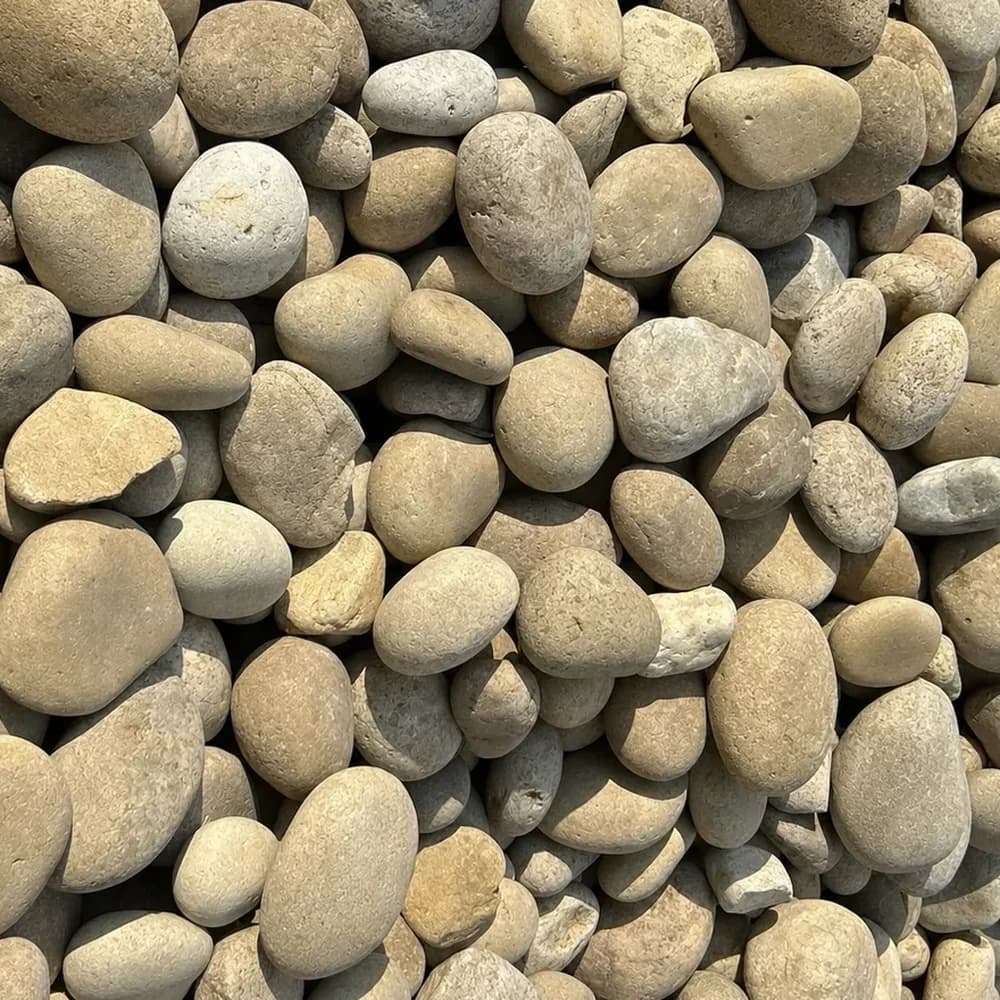
Large River Rock gives Texas dry creek beds and water-feature borders a natural, substantial look where bare clay can leave a landscape feeling unfinished.
- Size: 2 inches to 4 inches
- Type: Smooth, naturally rounded stones
- Color: Tans, grays and browns
From $1,214 for 1 ton, delivery included (larger loads cost significantly less per ton)
Free delivery included
Free delivery anywhere in Texas
Pick a delivery date
Weekday delivery, earliest Oct 27
“Needed large river rock for a yard project and them had fair pricing for the amount I got. They kept me updated the whole time, and I'm really happy with how it all turned out.”
Frank P. · Verified Buyer
Get a Free Quote
Fill out the form and our sales team will get back to you within the hour.
Size and Grading
- Size
- 2 inches to 4 inches
- Type
- Smooth, naturally rounded stones
- Color
- Tans, grays and browns
The order that comes up more than any other for this stone starts with a channel in the yard. An hour of high-intensity rain finds the lowest line across a property, cuts it a little deeper every storm, and by the second year there is a bare scar running from the downspouts or the culvert to the fence. Large river rock is what gets laid into that line: smooth, naturally rounded stone from two to four inches, in tans, grays and browns, heavy enough to stay in the channel when the water is actually moving through it.
Stones you place one at a time, not by the shovel
The size changes how the material behaves in your hands before it changes anything in the landscape. A shovel is close to useless in a pile of two to four inch stone. You move it with a fork, a bucket or your hands, and a five gallon bucket of it is a genuine lift.
The surfaces are water worn rather than broken, so the pieces are smooth and comfortable to handle, and every one is a different shape. Color runs through the stone rather than sitting on it, so there is nothing to fade, chip or rinse off through a West Texas summer. In a bed it reads as individual stones rather than as a texture, which is exactly the reason people choose it and exactly why a thin layer of it looks wrong.
At the mouth of a culvert, where the water lands hardest
Under a ranch drive or a county crossing, a culvert concentrates everything the ditch collects into one jet. Bare clay at the outfall undercuts fast and the road edge follows it. A lined outfall spreads that energy across stone instead of soil.
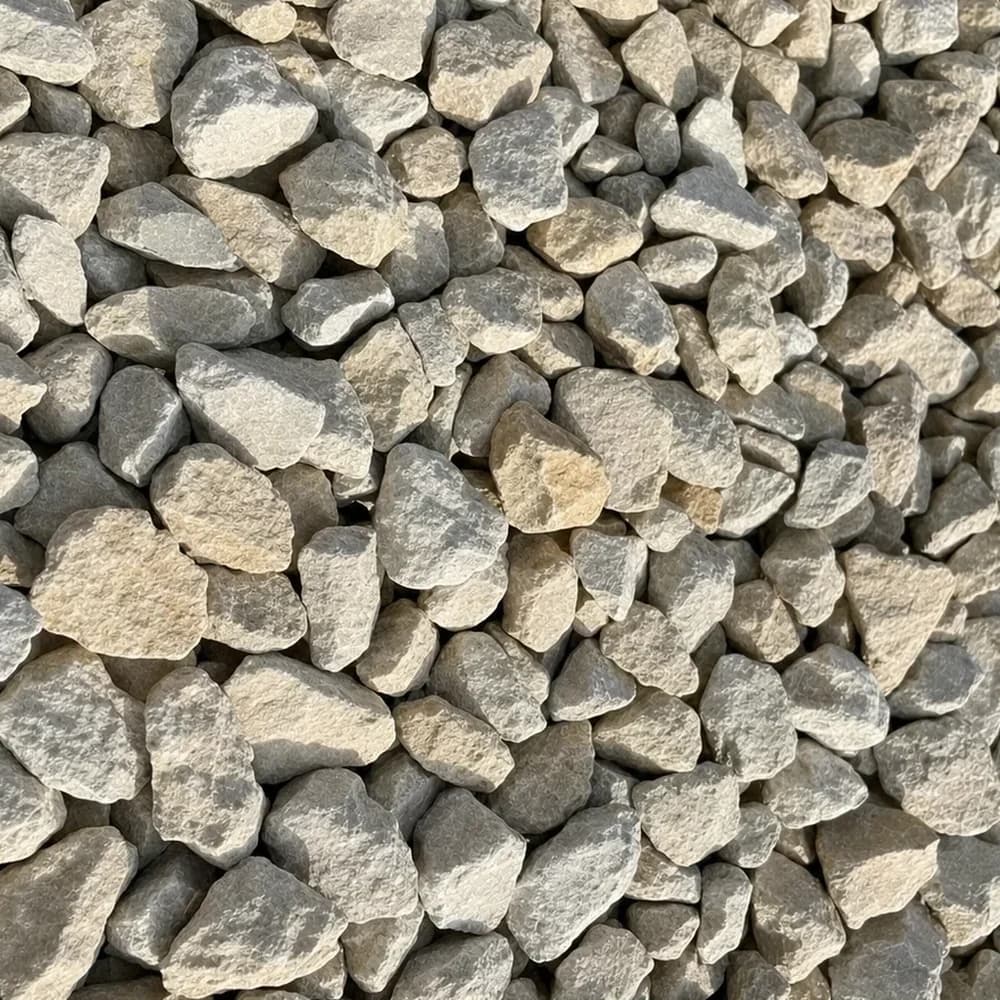
Large river rock has the mass for moderate flow and the look for a visible spot near a house or an entrance. Where the flow is genuinely severe, angular RipRap keys together and holds better than rounded stone does, so the honest answer at a hard-working outfall is often riprap in the throat with this stone carrying the finish out either side.
The same logic applies to a ditch line and to the banks of a stock tank. Get the toe of the stone down below the scour line rather than laying it neatly on top of the bank, because water will always take the bottom edge first.
Why a regraded low spot wants dirt, not two to four inch stone
Here is the job to turn down. A low corner of the yard that ponds after rain is a grading problem, and filling it with stone does not raise the grade, it just hides the puddle under rock. Water still collects there, the pieces settle into soft ground, and within a couple of seasons there is mud between every stone.
Bring the level up with compacted Fill Dirt, cap it with screened topsoil if grass is going back on it, and shape the finished contour so runoff leaves. If the water has to cross that area on its way somewhere, then a defined stone channel makes sense, but the channel and the fill are two separate pieces of work.
Xeriscape beds in full sun: spacing, planting gaps and glare
The other main use is decorative, and in this state that usually means a bed designed to need almost no watering. Large stone suits that well. It holds no moisture against stems, it does not break down into anything a weed wants to grow in, and it stays put when a storm crosses the bed.
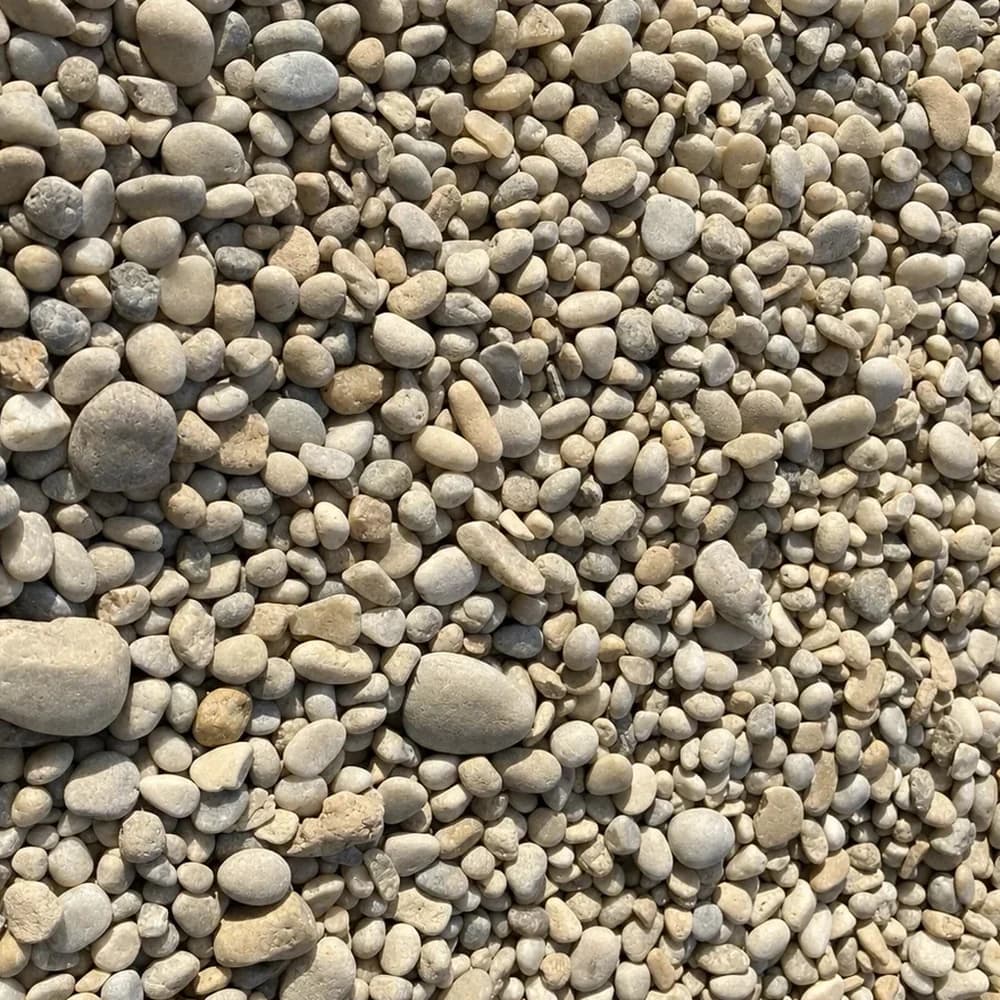
Two practical notes. Light-colored stone throws heat back, so a bed of it in full afternoon sun runs hotter than a mulched one, which suits native and drought-tolerant planting and punishes anything that is not. And leave a clear ring around the base of each plant rather than packing stone against the trunk. Mixing sizes reads better than a uniform field: set the large stone as the anchors and let the smaller Texas River Rock fill between them.
Why large river rock holds where a smaller stone rolls
Depth is decided by piece size, not by habit. A two inch landscape depth is the standard number for small decorative stone, and at this size it is barely one stone deep, so fabric shows through and every piece is exposed at its edge.
Four inches is the sensible working minimum for two to four inch stone, and six inches is right in a channel that carries real water, where you want pieces bearing on other pieces rather than on soil. Going deeper than that in a flat bed just buries stone nobody will see. In a channel, set the largest pieces along the center line where flow is fastest and grade down towards the banks.
A 30-foot ditch line and a 120 square foot rock garden, in tons
Two hypothetical layouts, worked through.
The ditch line, 30 feet long and 5 feet wide, at six inches: 30 x 5 = 150 square feet. Then 150 x 6 ÷ 12 = 75 cubic feet, and 75 ÷ 27 = 2.8 cubic yards. This site publishes around 2,700 lb per cubic yard for river rock, about 1.35 tons per yard, which puts the order near 3.8 tons.
The rock garden bed, 120 square feet at four inches: 120 x 4 ÷ 12 = 40 cubic feet, then 40 ÷ 27 = 1.5 cubic yards, roughly 2.0 tons at the same weight.
Both are examples rather than real installations, so measure your own layout and put the figures through the river rock calculator. When the number is settled, pick a quantity and a date here. Delivery is arranged at checkout from your ZIP, and the truck needs clear access to the drop spot. With stone this heavy, getting the pile within wheelbarrow range of the channel is worth more than any other decision you make that day, so mark the spot before the truck arrives.
Quickly Calculate How Much You Need
Material: Large River Rock
How to Measure
Measure the length and width of your project area in feet
Decide on depth in inches (2" for landscaping, 4" for driveways)
Enter the values above and we'll calculate the tonnage you need
Need help figuring out the right amount? We can help!
Call or text us at (512) 412-3378 and we'll help you calculate the right quantity for your project.
Not sure how much you need? The River Rock Calculator has depth guides, coverage charts and worked examples for this material.
Frequently Asked Questions About Large River Rock
Customer Reviews
Ordered large river rock from the team and it showed up on the day they promised. Really happy with how easy it was and the rock looks great in my yard.
Tara G. · Corpus Christi, TX · Verified Buyer
The rock looks great around my beds and was exactly what I needed. I'd definitely order again and recommend them.
Mark E. · El Paso, TX · Verified Buyer
Needed large river rock for a yard project and them had fair pricing for the amount I got. They kept me updated the whole time, and I'm really happy with how it all turned out.
Frank P. · Austin, TX · Verified Buyer
Ordered large river rock from the team and it showed up on the day they promised. Really happy with how it all went, I'd definitely order again and recommend them.
Jennifer A. · El Paso, TX · Verified Buyer
Got large river rock from Texas Rock Supply and the pricing felt fair for what showed up. I'm really happy with it and would definitely order again.
Nicole M. · Fort Worth, TX · Verified Buyer
Natural dry-creek edge
I used these larger stones to define the edge of a dry creek bed. They look natural and stay in place. It made the work at my San Antonio, TX property much more straightforward.
Casey M. · Fort Worth, TX · Verified Buyer
Large River Rock has 6 verified customer reviews with an average rating of 5 out of 5.