How Much Caliche Do You Need for a Ranch Road?
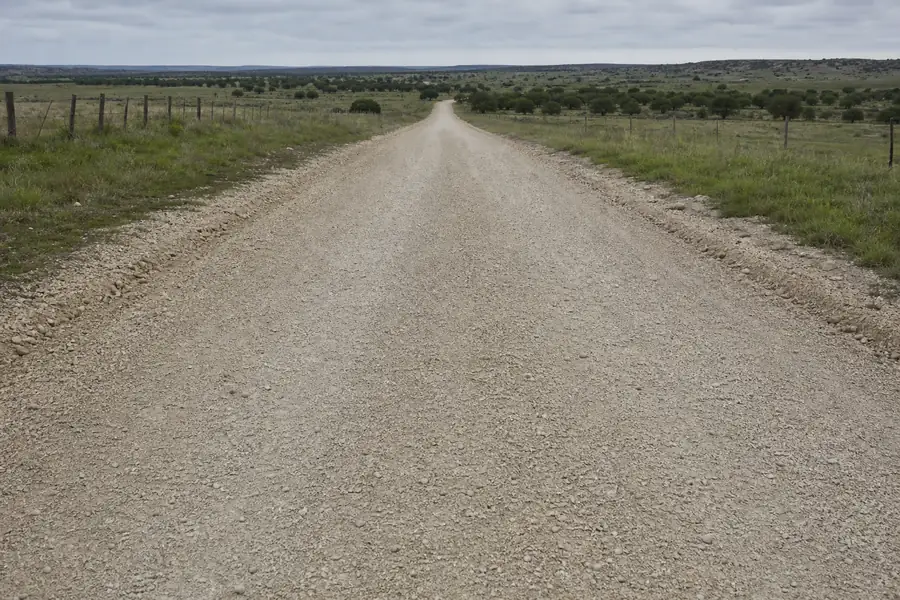
Quick answer: A typical caliche ranch road takes about 36 tons per 100 feet at a 12 foot width and 6 inch compacted depth. That works out to roughly 475 tons for a quarter mile and close to 1,900 tons for a full mile of road.
Those figures assume a standard ranch road profile: wide enough for a truck and trailer, with a compacted base thick enough to shed water and hold up under regular hauling. A narrower lane or a thinner base uses less material. Soft clay subgrade, low spots or heavy equipment traffic call for more.
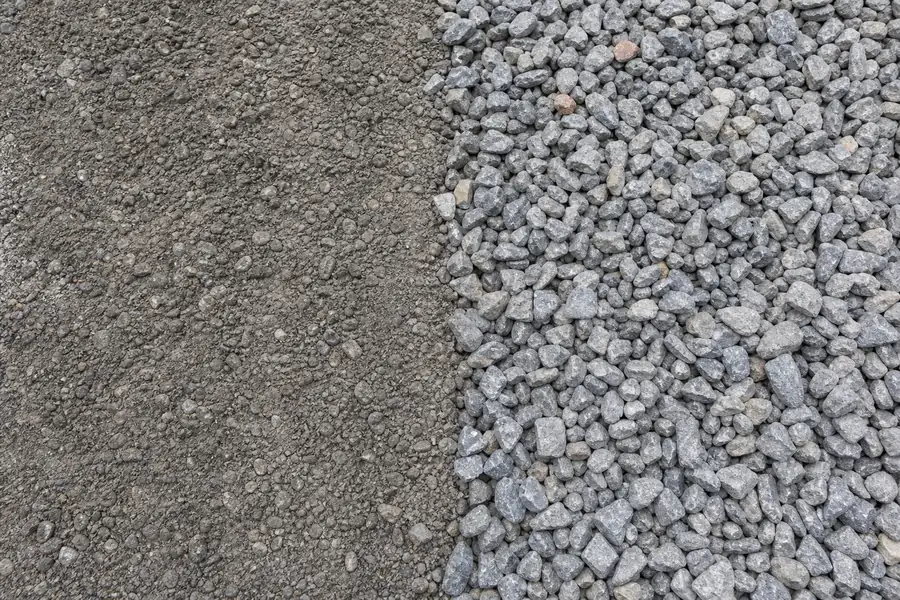
Caliche is the local name ranchers use for a naturally cemented gravel and calcium carbonate mix common across Central and West Texas. On an order sheet it's sold as Flex Base, which is the crushed, graded version of that same material quarries produce for road building. The exact tonnage for your road depends on the length, width and depth you're building to, and the road base calculator will run those numbers for your specific stretch.
Caliche Ranch Road Tonnage by Length and Width
The table below breaks down caliche tonnage by road length and width at a 6 inch compacted depth, the standard thickness for a ranch road carrying trucks and trailers.
| Road Length | 10 ft Wide | 12 ft Wide | 14 ft Wide |
|---|---|---|---|
| 100 ft | 30 tons | 36 tons | 42 tons |
| 500 ft | 150 tons | 180 tons | 210 tons |
| 1,000 ft | 300 tons | 360 tons | 420 tons |
| 1 mile (5,280 ft) | 1,584 tons | 1,901 tons | 2,218 tons |
Every row assumes a 6 inch compacted depth. If the road crosses soft subgrade and needs 8 inches instead, add roughly 30 percent more tons to whichever cell matches your length and width.
How Deep Should a Caliche Ranch Road Base Run?
Most caliche ranch roads run 4 to 6 inches of compacted base for light truck and trailer traffic, and 6 to 8 inches where the road carries hay trucks, livestock trailers or daily equipment hauling.
Depth matters more than frost in Texas. Frost depth here runs about 6 inches statewide, but the bigger issue on a ranch road is expansive clay subgrade, especially across the I-35 corridor and anywhere the road crosses black gumbo clay. That clay swells and shifts several inches a year with moisture, and a thin caliche layer over it will rut and pothole within a season.
Where a stretch crosses clay or a low spot that holds water after rain, add 2 inches to the base depth and crown the road 3 to 4 inches higher in the center than the edges so water sheds into the bar ditches instead of soaking into the caliche. For entrances and high traffic stretches, some ranchers cap the caliche with a layer of Crushed Limestone Base for a harder driving surface that sheds water faster than caliche alone.
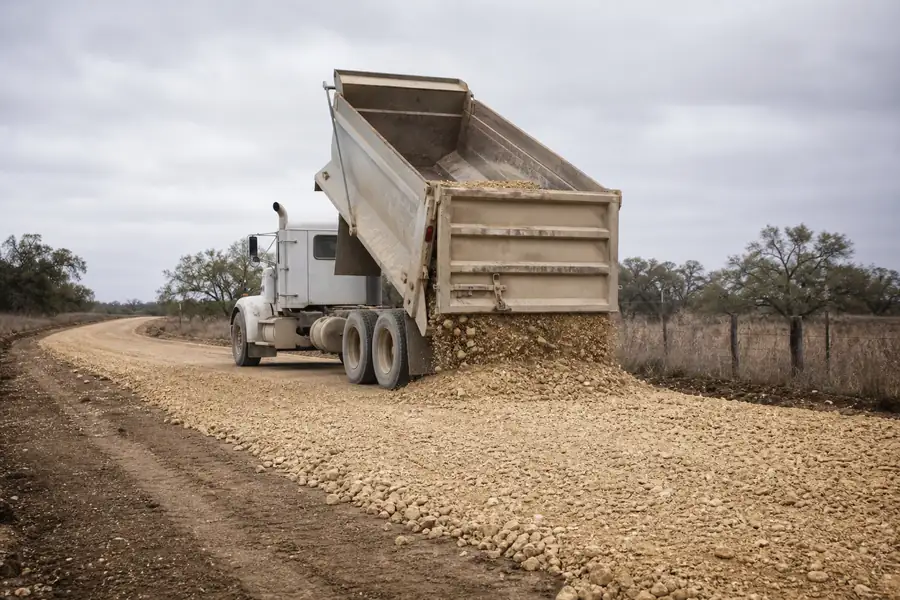
What Changes How Much Caliche a Ranch Road Needs
Compaction, subgrade condition and road shape move the tonnage in the table above up or down, sometimes by 15 percent or more.
- Soft or wet subgrade needs a thicker base, or a layer of geotextile fabric under the caliche to keep it from working down into the clay
- Crowning and bar ditches add material along the shoulders that a flat-width calculation misses
- Gate approaches, turnouts and cattle guard aprons need extra depth where traffic slows and turns
- Loose caliche compacts down to about 85 to 90 percent of its delivered volume, so order 10 to 15 percent more than the raw calculation to cover that shrinkage
Freight is often the bigger cost driver on a ranch road order than the caliche itself. Rural routes out to ranch land typically run farther from the quarry than a delivery inside Houston, San Antonio or Dallas city limits, and that mileage shows up in the delivered price per ton more than the material does. Texas Rock Supply delivers caliche and other bulk material anywhere in Texas, including rural routes well outside the metro triangle, and the delivery page has details on how that freight is figured for your address.
FAQs
What is caliche made of?
Caliche is a naturally occurring mix of gravel, sand and calcium carbonate that cements together as it dries, common across Central and West Texas. Quarries crush and grade it into the Flex Base product sold for road and driveway building.
How much does caliche cost per ton in Texas?
Price per ton varies by quantity ordered and freight distance from the quarry to your ranch, since delivery mileage often affects the total more than the material cost. Get a live quote through Texas Rock Supply for an accurate delivered price to your address.
Can I use caliche instead of gravel for a ranch road?
Yes, caliche is actually the more common choice for ranch roads because it compacts into a firm, semi-cemented surface that holds up better under repeated truck traffic than loose gravel. Gravel works fine for short driveways or low-traffic paths, but caliche is the standard for longer ranch roads.
How thick should caliche be for a driveway compared to a ranch road?
A residential driveway typically needs 4 inches of compacted caliche, since it only carries passenger vehicles. A ranch road built for trucks, trailers and equipment usually needs 6 to 8 inches to hold up under heavier and more frequent loads.
Does caliche need to be compacted after it's spread?
Yes, caliche needs to be compacted in layers, usually with a roller or plate compactor, to reach its full strength and shed water properly. Uncompacted caliche stays loose, ruts quickly under traffic and requires far more material to build the same finished depth.