Railroad Ballast: Coarse Angular Stone for Texas Pads and Access Routes
Railroad Ballast fits the working layer beneath Texas heavy equipment pads and access roads, providing angular stone support with fast drainage through the base.
- Size: Roughly 1 inch to 2.5 inches
- Grading: Graded to interlock under load while draining freely
- Type: Large angular crushed stone
From $469 for 1 ton, delivery included (larger loads cost significantly less per ton)
Free delivery included
Free delivery anywhere in Texas
Pick a delivery date
Weekday delivery, earliest Oct 27
“Needed railroad ballast for a project, and this company got it delivered on the day they promised. The railroad ballast was clean and consistent, really happy with how it turned out.”
Tony V. · Verified Buyer
Get a Free Quote
Fill out the form and our sales team will get back to you within the hour.
Size and Grading
- Size
- Roughly 1 inch to 2.5 inches
- Grading
- Graded to interlock under load while draining freely
- Type
- Large angular crushed stone
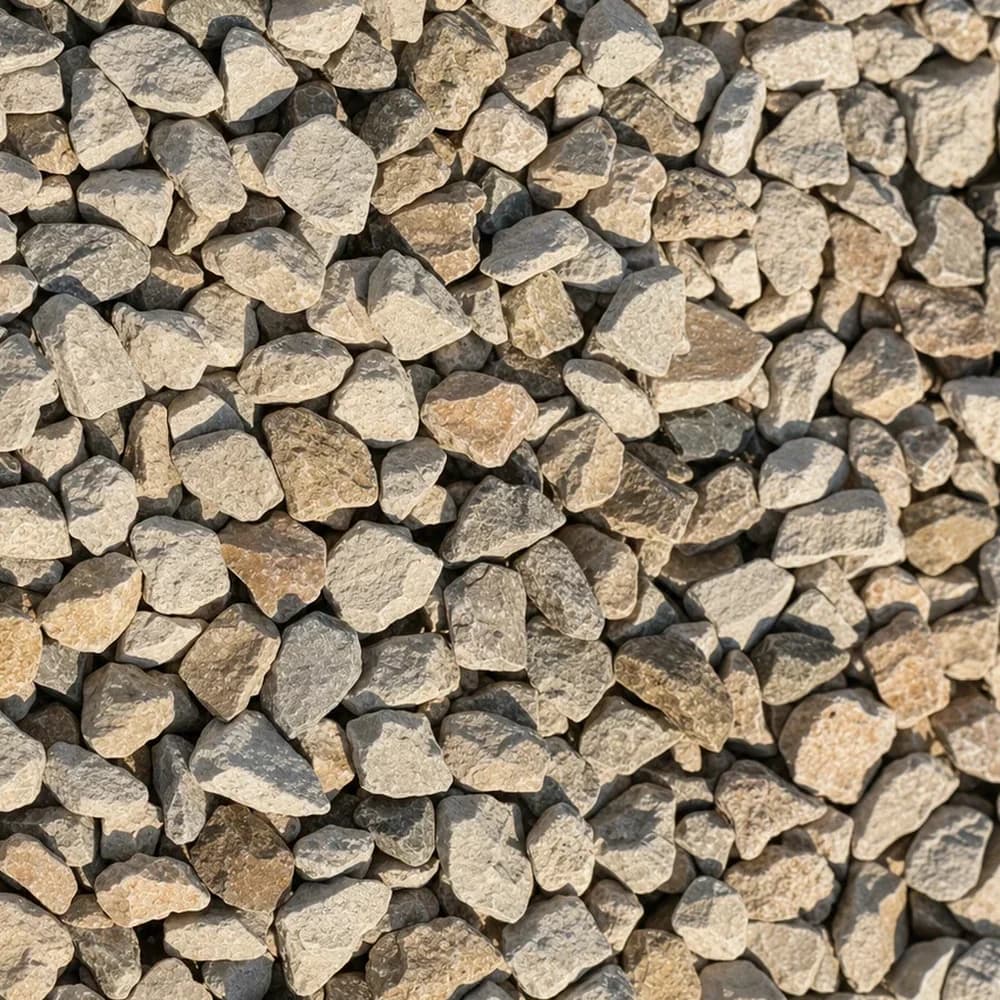
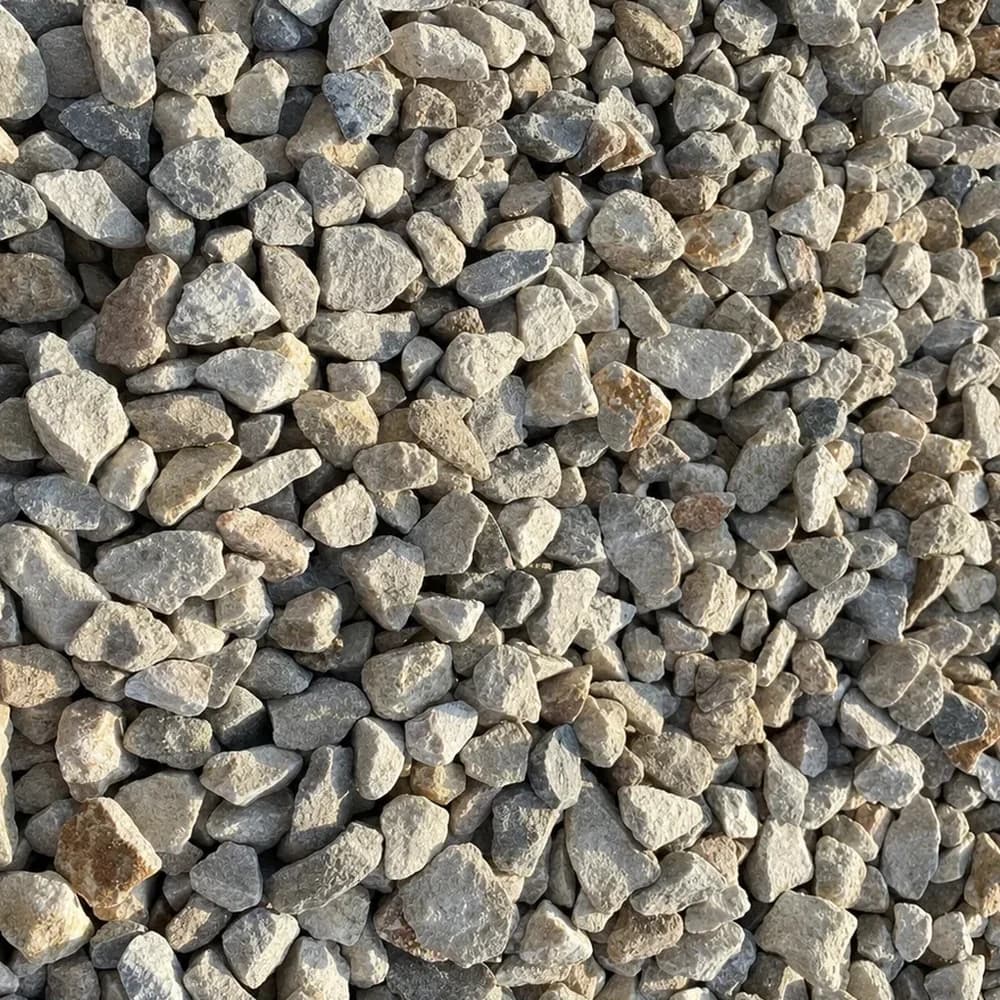
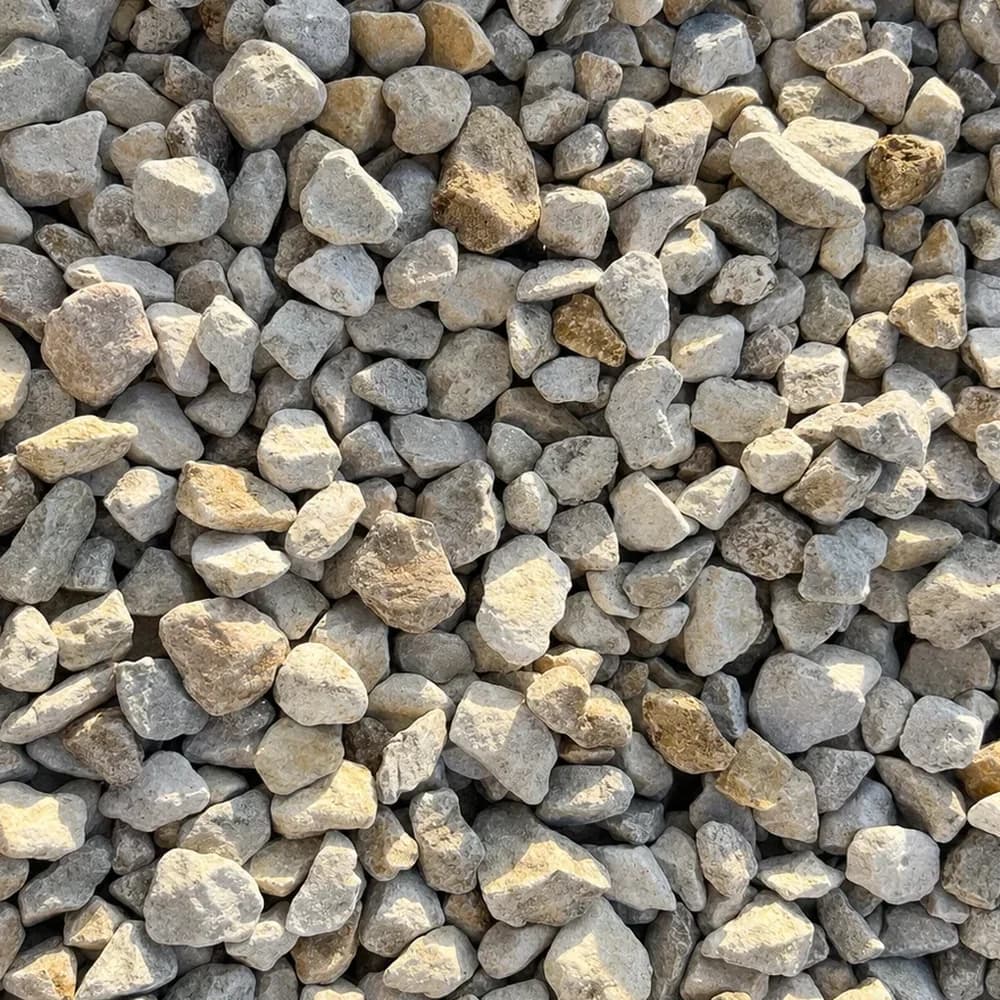
Stand next to a fresh pile of railroad ballast and the scale is obvious before anyone measures anything. The pieces run roughly an inch to two and a half inches, all of them broken rather than rounded, and the pile is more air than most people expect. A shovel skates off the top of it. That openness is the working principle of the material: large angular stone that carries weight through the points where the pieces lock, while rain drops straight past them instead of sitting in the layer.
The dry stretch between wet spells is when this stone goes down
Texas does not stop base work for cold. Frost is a Panhandle conversation, and across the rest of the state the calendar that matters is the rain gauge. What stops a pad job here is a saturated subgrade, not a thermometer.
That gives two seasonal cases and they pull in opposite directions. Where the ballast is being placed to build a surface properly, you want the ground dry enough to shape and compact, which usually means the settled stretch after a wet spell has drained off rather than the first dry morning after it. Working saturated gumbo just churns it. Where the ballast is going in as the fix for a yard that turns to soup every time a front comes through, the timing argument flips: get it down before the next run of storms, because that layer is what lets the work carry on while the ground around it is unusable.
Heat is not the enemy. A summer pad job in this state is a water and dust problem, not a material problem.
Stripping and shaping the subgrade before the ground turns again
Whatever the season, the stone is only as good as what it sits on. Strip the organics and any soft, pumping material until you are on firm ground. Shape the subgrade with a fall on it, so water reaching the bottom of the stone has a direction to travel rather than a hole to fill.
On expansive clay, put a geotextile between the ground and the stone. Clay pushed up into a coarse layer from below is what turns a drained pad into a wet one, and the fabric is also what stops the bottom two inches of an expensive load disappearing into soft ground on the first pass of a loaded machine. Get the edges thought through at this stage too, because a coarse stone layer with a free edge will spread sideways under traffic until it is thinner in the middle than you planned.
Railroad ballast under a turnaround pad that holds a loaded trailer
The pad is where this size earns its money. Equipment parking, a trailer turnaround, a laydown area behind a shop, a hard standing where a container sits: heavy point loads on ground that changes volume with the season. The stone spreads that load, and the gaps between pieces mean the pad is not holding water under the wheels.
Access routes are the same argument stretched out. A plant road or a ranch route that takes loaded trucks in wet conditions wants a coarse layer down low, with a finer graded material above it if the surface has to be smooth. Ballast on its own will never be a comfortable driving surface, and it was never meant to be one. Where the job is a lane that people drive daily, put Flex Base over the top and compact it, or start with a base material instead.
Along a foundation drain, and why a dog run is the wrong place for it
Deep drainage is the third good use. In a wide trench along a foundation, a stone this coarse carries serious volume and is heavy enough that it does not shift when backfill presses against it. Wrap the trench in geotextile first, exactly as you would for a smaller drainage stone, and take the run to a real outlet.
A side-yard dog run is the job to turn down. Pieces this size are sharp, uneven underfoot and rough on paws, and nothing about the surface is comfortable for an animal that lives on it. Rounded Pea Gravel is the usual answer for a dog run, with a drainage layer beneath it if the ground stays wet. Sending the right material to the right job is the whole point of a size range this wide.
A 28 by 40 parking pad and a 45-foot foundation drain, in tons
Two hypothetical jobs, with the arithmetic shown.
The parking pad, 28 by 40 feet, with eight inches of ballast over a prepared subgrade: 28 x 40 = 1,120 square feet. Then 1,120 x 8 ÷ 12 = 746.7 cubic feet, and 746.7 ÷ 27 = 27.7 cubic yards. This site publishes about 2,900 lb per cubic yard for the #4 stone and ballast family, roughly 1.45 tons per yard, so the order lands near 40.1 tons.
The foundation drain, 45 feet long, a trench two feet wide, with 18 inches of stone in it: 45 x 2 = 90 square feet, then 90 x 18 ÷ 12 = 135 cubic feet, and 135 ÷ 27 = 5.0 cubic yards, about 7.3 tons at the same weight.
Both figures are examples rather than installed jobs. Run your own dimensions through the stone calculator before you settle on a number, and keep the five percent it adds by default if the subgrade is uneven.
Year one: settling, weeds through the gaps and the top-up
A coarse pad moves a little in its first months and then stops. Traffic reseats the pieces, the layer tightens, and the surface drops perhaps an inch as it does. Plan for a top-up rather than being surprised by one, particularly along the edges and at the point where vehicles turn.
Weeds come through eventually. There is enough space in a layer this open for windblown seed and dust to collect, and by the second summer there will be growth in the corners that see no traffic. Fabric underneath and a defined edge keep that slow. Nothing about the stone itself breaks down.
When the numbers are settled, choose your quantity and delivery date on this page. Delivery is arranged at checkout by ZIP, and a load of this size wants a firm, open drop point with room for the truck to lift a bed clear. Splitting a big order across two piles at either end of the pad saves more machine time than most people expect.
Quickly Calculate How Much You Need
Material: Railroad Ballast
How to Measure
Measure the length and width of your project area in feet
Decide on depth in inches (2" for landscaping, 4" for driveways)
Enter the values above and we'll calculate the tonnage you need
Need help figuring out the right amount? We can help!
Call or text us at (512) 412-3378 and we'll help you calculate the right quantity for your project.
Not sure how much you need? The Stone Calculator has depth guides, coverage charts and worked examples for this material.
Frequently Asked Questions About Railroad Ballast
Customer Reviews
Price was fair too, felt like good value and I'd use them again.
Lisa N. · Austin, TX · Verified Buyer
Grabbed railroad ballast from them and it was just what I ordered. Delivery arrived right on schedule, so I'm really happy with how it went.
Chris N. · Fort Worth, TX · Verified Buyer
Needed railroad ballast for a project, and this company got it delivered on the day they promised. The railroad ballast was clean and consistent, really happy with how it turned out.
Tony V. · El Paso, TX · Verified Buyer
Ordered railroad ballast from this company and everything went really smooth. Delivery showed up as planned, and the driver put it right where I needed it. Super happy with the whole thing and would definitely order again.
Tony J. · Dallas, TX · Verified Buyer
Locks together well
I used it under a utility path where I wanted a heavy, angular material. It locked together well. It was a practical choice for the job at my El Paso, TX home.
Emerson J. · San Antonio, TX · Verified Buyer
Got railroad ballast from this company, ordering was painless and I'd definitely order again and recommend them.
Dave P. · San Antonio, TX · Verified Buyer
Railroad Ballast has 6 verified customer reviews with an average rating of 5 out of 5.